
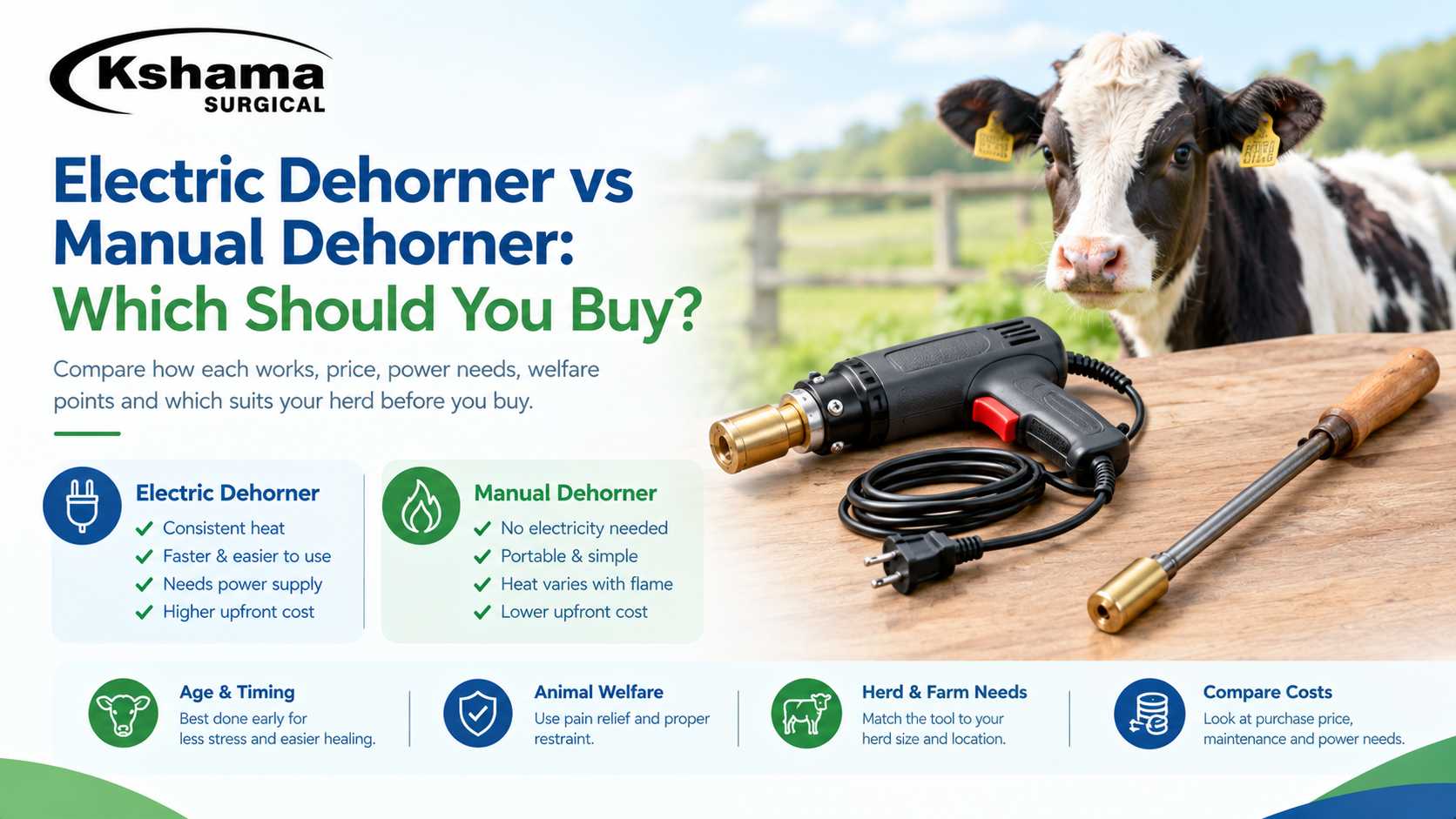
An electric dehorner suits farms with steady power and regular calving, while a manual hot iron suits remote sites. The right choice depends on herd size and handling skill.
A calf’s horn bud is destroyed while it is still small, and the tool used decides how controlled that process is. An electric dehorner heats a metal tip from a power supply, whereas a manual iron is heated in a flame. This guide compares the two, explains what each costs and helps you choose.
How an Electric Dehorner Works
An electric dehorner is a handheld heating tool. A metal tip, usually brass, is warmed by an internal element until it is hot enough to cauterise the tissue that grows the horn. The operator holds the tip against the horn bud for the time recommended by their veterinarian, which stops horn growth permanently when done correctly. Wikipedia’s overview of dehorning describes the main methods in use and why the practice exists.
The practical benefit of an electric dehorner is consistency. Because the heat comes from the tool rather than from a fire, the operator does not have to guess how long the iron has been out of the flame or whether it has cooled. That makes the working routine easier to repeat from one animal to the next.
The trade-off is the power supply. An electric dehorner needs a socket or generator, a safe cable route and dry conditions around the animal. In a barn without reliable electricity, that requirement can decide the question on its own.
How Manual Dehorners Work
A manual tool covers any dehorning method that does not use mains power. The most common is the hot iron dehorner, a metal rod with a brass tip and a wooden handle that is heated in a fire or on a gas burner until it is hot enough to use. Because it carries only the heat it absorbed, the iron has to be returned to the flame between animals.
Other manual options include cutting tools and wire saws, which suit older animals whose horns have grown beyond the bud stage. These involve more tissue and more bleeding, so they belong with a veterinarian rather than on the farm routine.
The strengths of the hot iron are its simplicity and independence. It has no cable, no element to fail and no need for electricity. The weakness is control: heat varies with the flame, the time in the fire and the weather, and the operator must judge when the iron is ready.
Side-by-Side Comparison
The table below compares the two approaches using qualitative information only, without made-up performance figures.
| Factor | Electric dehorner | Manual hot iron |
| Heat source | Mains power or generator | Open flame or gas burner |
| Heat consistency | More even from one animal to the next | Varies with time out of the flame |
| Infrastructure needed | Safe power supply and dry floor | Fire, burner and a safe place to heat |
| Portability | Limited by cable length | Easy to carry to remote sites |
| Operator skill | Moderate, with a repeatable routine | Higher, because heat must be judged |
| Upfront cost | Generally higher | Generally lower |
| Best suited for | Dairy farms and regular disbudding | Occasional use and remote locations |
Age, Timing and Welfare in Disbudding
A calf dehorner is intended for young animals. The horn bud sits loose under the skin in the first weeks of life and attaches to the skull later, which is why disbudding is done early. Doing it later involves a bigger wound and a harder recovery. Your veterinarian can tell you the right age for your breed and herd.
Welfare deserves as much thought as the equipment. Veterinary bodies generally recommend pain relief, usually a local anaesthetic with an anti-inflammatory, for disbudding, and proper restraint keeps both the animal and the operator safe. Whichever calf dehorner you choose, the procedure should be carried out by a trained person following veterinary advice and local regulations.
Key points to remember before any procedure:
- Age: disbud while the horn bud is still small and unattached.
- Restraint: use a calf crate or a trained handler to hold the head steady.
- Pain management: discuss local anaesthesia and aftercare with your veterinarian.
- Hygiene: clean the tip between animals and keep the area free of mud and manure.
- Aftercare: check the sites over the following days for swelling or discharge.
When Each Option Makes Sense
Neither tool wins everywhere, so it helps to picture the situation you will actually be working in.
Speed and repeatability favour the electric dehorner. On a dairy unit where a batch of calves is disbudded in one sitting, steady heat means the tenth calf is treated much like the first, and nobody is standing around waiting for an iron to come back up to temperature.
A tight budget points the other way. A manual iron costs a fraction of the price, and for a household with a few calves a year it is hard to justify more. The saving only holds if someone already knows how to judge the heat, because guesswork on a flame-heated tip is where most problems begin.
Remote sites and unreliable power settle the question on their own. With no dependable socket, a cable-bound tool sits idle and its cable length limits where you can work, while an iron and a gas burner travel easily in a vehicle. A farm with a generator and a safe route for the cable can still run an electric dehorner without trouble, provided the floor is dry.
The working area matters too. Heating an iron in an open flame beside straw, feed or restless animals is a genuine fire risk, and a tool with no flame removes it, though a damaged cable or element brings its own hazard and should be replaced promptly.
Flexibility is where owning both earns its place. Many farms keep an electric unit for routine work and an iron in reserve for power cuts and visits away from the main shed.
What to Expect on Price
Anyone comparing the electric dehorner price across catalogues will find a wide range, and the figure reflects build as much as brand. At the time of writing, Kshama Surgical lists a standard electric model with a brass tip and wooden handle at ₹850, and a heavy version with a stainless steel rod, brass tip and wooden handle at ₹5,100. A non-electric version is listed at ₹350. These figures are listed prices that can change, so check the product page for the electric dehorner price before you order.
The factors that usually drive the difference are:
- Construction: a heavier rod and sturdier fittings generally cost more.
- Heating element quality: better elements tend to last longer under repeated use.
- Insulation and handle: a well-insulated handle protects the operator.
- Intended workload: a farm disbudding many calves needs a tougher tool than one used a few times a year.
What to Check Before You Buy
Specifications on a product page tell only part of the story. Before purchasing any dehorning tool, check these points:
- Whether the tip is made of a material that holds heat well, such as brass.
- That the handle is insulated and comfortable to grip for repeated use.
- The cable length and plug type, and whether they suit your barn or generator.
- What replacement parts or support the supplier offers.
- That the tip size fits the calves you handle, since horn buds differ by breed and age.
Which Should You Buy?
Put simply, a dairy farm with regular calving, steady power and a trained handler is usually better served by the electric option, while a smallholding or mobile service without dependable electricity will get on well with a manual hot iron, provided the operator is experienced and the iron is heated safely. If animals are past the bud stage, neither tool is the right answer, and a veterinarian should assess the situation.
Whatever you choose, build the choice around people as well as equipment. Train every handler on restraint and safe heating, keep a first-aid kit nearby, and write down the routine so that it does not depend on one experienced person. Check local animal-welfare rules too, because requirements on disbudding, anaesthesia and who may perform the procedure differ between regions. A tool that is cheap to buy but poorly understood costs far more in animal welfare than one that suits the people using it.
Frequently Asked Questions
What is an electric dehorner?
An electric dehorner is a handheld heating tool with a metal tip that is warmed by an internal element. It cauterises the horn bud of a young calf so the horn stops growing. It needs a power supply and is used following veterinary guidance.
Is an electric dehorner better than a hot iron dehorner?
Neither is better in every situation. An electric dehorner gives steadier heat and a repeatable routine, while a manual iron needs no electricity and costs less. The better choice depends on power access, herd size and the experience of the person using it.
How much does an electric dehorner cost in India?
The electric dehorner price varies with construction and workload. On the Kshama Surgical site, a standard model is listed at ₹850 and a heavy model at ₹5,100 at the time of writing. Check the product page for current figures.
At what age should a calf dehorner be used?
A calf dehorner is used while the horn bud is small and not yet attached to the skull, which is in the first weeks of life. The exact timing depends on breed and herd, so ask your veterinarian before scheduling the procedure.
Is dehorning painful for calves?
Yes, disbudding causes pain, which is why veterinary bodies generally recommend local anaesthesia and anti-inflammatory medication. Gentle restraint, correct heat and prompt aftercare reduce stress. Discuss a pain-management plan with your veterinarian before starting.
How do I clean and maintain a dehorner?
Allow the tool to cool, then wipe residue from the tip and check the cable, plug and handle. Store it dry and clean the tip between animals to limit infection. Replace any tool with a damaged cable, loose handle or worn tip.
Can I use a hot iron dehorner on adult cattle?
No. This tool is meant for horn buds on young calves. Adult horns are attached to the skull and need a different procedure that should be performed by a veterinarian with suitable anaesthesia and equipment.
Conclusion
An electric dehorner gives consistent heat and a repeatable routine, which suits farms with reliable power and regular calving. A manual hot iron costs less and works where electricity does not, but it asks more of the operator. Whichever you choose, success depends on early timing, correct restraint, pain management and clean aftercare as much as on the tool.
Before buying, note your herd size, how often you disbud and whether power is dependable at the site. Then explore the dehorner range at Kshama Surgical or contact the team for guidance on the model that fits your farm.
