
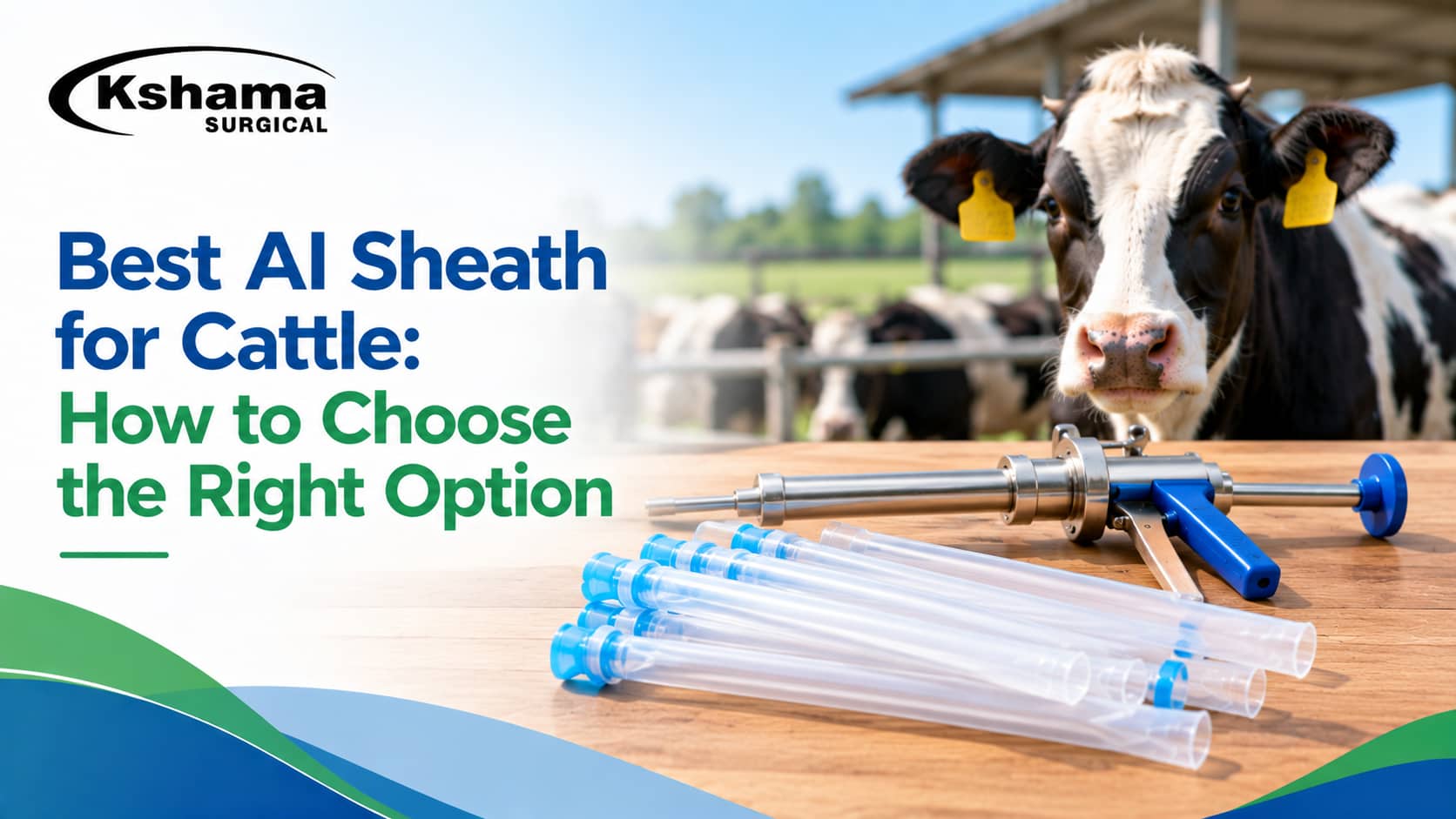
The best AI sheath is the one that fits your insemination gun without play, matches your straw format and arrives in a pack size you will actually use before the season ends. That sounds simple, yet the wrong AI sheath is one of the most common reasons a technician loses time at the cow side, or loses part of a semen dose to leakage. This guide explains what the sheath does, how the main designs differ, how to check fit before a bulk order, and which handling habits keep every sheath clean until the moment of use.
What an AI Sheath Does Before the Straw Reaches the Cow
A sheath is the thin plastic tube that slides over a loaded insemination gun. It looks minor next to the gun and the nitrogen container, but it carries three jobs at once. It holds the thawed straw in place so semen is not pushed back along the barrel. It gives the gun a fresh outer surface for each animal. And it provides the opening through which the dose leaves the instrument when the plunger is pressed.
Because the gun is reused and the sheath is not, the AI sheath is what separates one cow from the next. Anyone who has watched a technician rush through a herd will recognise the risk: a sheath that is reused, dropped on the ground or fitted with dirty hands undoes the hygiene the rest of the kit was bought to provide. A reliable disposable AI sheath is therefore a hygiene tool first and a consumable second, and a good AI sheath earns its place by doing that one job without drama.
For background on why a clean, controlled delivery matters in breeding programmes, the general principles of artificial insemination are well documented and apply across species.
Sheath Types You Will See in Listings
Product names vary between suppliers, so it helps to know the terms before comparing. The labels below describe how sellers commonly use them; always confirm the exact design with the supplier, because naming is not fully standardised.
Standard sheaths are plain, open-tip tubes sold in packets, often of 50 pieces. They are the usual choice for routine farm and field use. On the Kshama Surgical site, for example, standard sheaths are listed in 50-piece packets and in a 500-piece combination of ten packets.
Dual-delivery sheaths are described by sellers as having a tip designed to release semen differently from a single-opening tube. Kshama Surgical lists a dual-delivery mini sheath in a 100-piece pack.
A split sheath is a term some buyers and sellers use for designs that open or separate in a particular way. Because the phrase is used loosely, ask the supplier to describe how a split sheath works and which gun lock it suits before you order.
A sanitary sheath is generally described as a sheath with an added protective layer or sleeve intended to keep the working tip cleaner during passage through the vulva. It is most often considered where animals are kept in soiled or wet conditions, and you should confirm availability with the supplier.
How the Types Compare
| Question to ask | Standard sheath | Dual-delivery sheath | Split sheath | Sanitary sheath |
| What is it mainly chosen for? | Routine, everyday inseminations | Technicians who prefer a different delivery tip | Specific designs named by the seller | Dirty or wet working conditions |
| What must be confirmed? | Gun lock and straw size | Gun lock and straw size | Exact design and gun fit | Whether the extra layer suits your gun |
| Where do most problems arise? | Loose fit on the gun | Assuming it fits every gun | Vague product descriptions | Extra handling steps skipped |
A Five-Step Way to Choose
Choosing well is easier when you work through the decision in order rather than starting with price.
- Confirm your straw format. Semen supply is commonly in 0.25 ml mini straws or 0.5 ml medium straws. The sheath must suit the format you use.
- Identify your gun’s locking style. Auto-lock, O-ring and French-lock guns are not interchangeable with every sheath.
- Decide on a design. Pick standard, dual-delivery, split or sanitary according to working conditions and technician preference.
- Test a small pack first. Fit a few sheaths to your own gun and fire a dry test before committing to a carton.
- Match pack size to your season. Estimate inseminations over the breeding season and buy in the packet or carton size that covers them with a small reserve.
Matching an AI Sheath to Your Gun and Straw
Fit is the point where most purchases succeed or fail, so choosing an AI sheath should start here. Two sheaths sold under the same description can still differ slightly in moulding, and a small difference shows up as a loose collar, a sheath that rotates on the barrel or a tip that does not seat cleanly. When you test, check that the sheath locks firmly, does not twist when pressure is applied, and lets the plunger travel the full distance without catching. If the supplier cannot tell you which locks a given AI sheath is made for, treat that as a warning sign rather than a minor gap in information.
Reading Prices and Pack Sizes
Buyers often search for the AI sheath price before anything else, but a single figure says little without the pack size behind it. A quoted AI sheath price only means something once you know how many pieces it covers. A packet of 50 pieces, a pack of 100 and a carton of 500 are priced differently per piece, and the cheapest listing is frequently just the smallest pack. To compare fairly, divide each total by the number of sheaths and compare like with like.
Several things explain differences in AI sheath price between sellers:
- Pack quantity: larger packs normally reduce the cost per sheath.
- Design: dual-delivery and sanitary designs involve extra manufacturing and are generally priced differently from plain tubes.
- Fit for your gun: a cheaper sheath that leaks costs more in lost semen than the saving it offers.
- Packaging: sealed, dust-resistant packets protect sterility during storage.
- Order volume: cooperatives and veterinary distributors buying in volume can usually request a written quotation covering delivery as well.
If you want current pricing for a particular pack, check the product page directly rather than relying on a figure quoted in an article, since prices change.
Handling and Storage Habits That Protect Sterility
A sheath that is perfectly made can still be spoiled before use. The habits below are simple, and they matter most for any AI sheath that has to stay clean until the second it is fitted. Treat a disposable AI sheath as sterile stock, not as loose plastic.
- Keep packets sealed and stored dry, cool and out of direct sunlight, since heat and ultraviolet light weaken plastic over time.
- Store sheaths away from disinfectants, fuel and other chemicals whose vapours can taint plastic.
- Use a dedicated sheath container in the field rather than carrying loose sheaths in a bag. Kshama Surgical lists a holder for 50 sheaths for this purpose.
- Handle only the base of the sheath, never the tip, and fit it immediately after loading the straw.
- Never reuse a disposable AI sheath, even between two attempts on the same animal.
Mistakes That Waste Sheaths and Semen
Most losses come from a short list of avoidable errors.
- Buying before checking fit, then discovering a loose collar after a large order is delivered.
- Choosing by price per packet, which hides the real cost per sheath.
- Assuming every design suits every gun, when the supplier has not confirmed compatibility for that AI sheath.
- Fitting the sheath with contaminated hands, which defeats its purpose.
- Running out mid-season, which tempts operators to improvise instead of waiting for stock.
Frequently Asked Questions
What does a sheath do on an insemination gun?
It is a single-use plastic cover that fits over a loaded insemination gun. It keeps the straw sealed in the barrel, gives each cow a clean instrument surface, and provides the tip through which semen is released. It prevents cross-contamination between animals during a breeding round.
How do I know which sheath fits my gun?
Match the gun’s locking style and the straw size you use, then test a few sheaths on your own gun. A correct fit locks firmly, does not rotate and lets the plunger move fully. Ask the supplier to name compatible lock types in writing.
Is a sanitary sheath better than a standard one?
Not automatically. A sanitary sheath adds a protective layer, which can help in soiled or wet conditions, but it involves extra handling and must suit your gun. For clean working conditions a well-fitting standard sheath is often sufficient, so decide according to how your animals are housed and handled.
What should I check before comparing sheath prices?
Check the number of pieces in each pack, the design and the compatible gun lock. Divide the total price by the piece count to find the cost per sheath. Comparing packets of different sizes without this step gives a misleading picture.
Can a sheath be reused?
No. Sheaths are designed for one use only. Reusing one risks carrying contamination between animals and weakening the seal at the gun tip, which can cause leakage. Fit a fresh sheath for every insemination attempt, even when a second attempt on the same animal is needed straight away.
How long can sheaths be stored?
Sealed sheaths remain usable for as long as they are kept dry, cool and away from sunlight and chemicals. Storage conditions matter more than the date of purchase. Check packets for damage and rotate stock so older packs are used first.
Where can I find sheath options for sale in India?
Veterinary suppliers and manufacturers list sheath packs online and through dealers. Choose a seller who states pack size, design and compatible gun lock clearly, and who will provide a written quotation for bulk or repeat orders, including delivery terms for your location.
Conclusion
Choosing the right AI sheath comes down to fit, format and pack size rather than headline price, and the best AI sheath for one farm may not be the best for another. Confirm your straw format and gun lock first, decide whether a standard, dual-delivery, split or sanitary design suits your conditions, test a small pack, and then buy in the quantity your breeding season genuinely needs. Handle every sheath as a sterile item, because the best-chosen AI sheath still fails if it is contaminated before use.
Before your next order, note your gun’s lock type, your straw format and your expected inseminations for the season. Explore the Kshama Surgical AI equipment range, read more practical guides on the Kshama Surgical blog, or contact the team to confirm which sheath suits your gun.
