
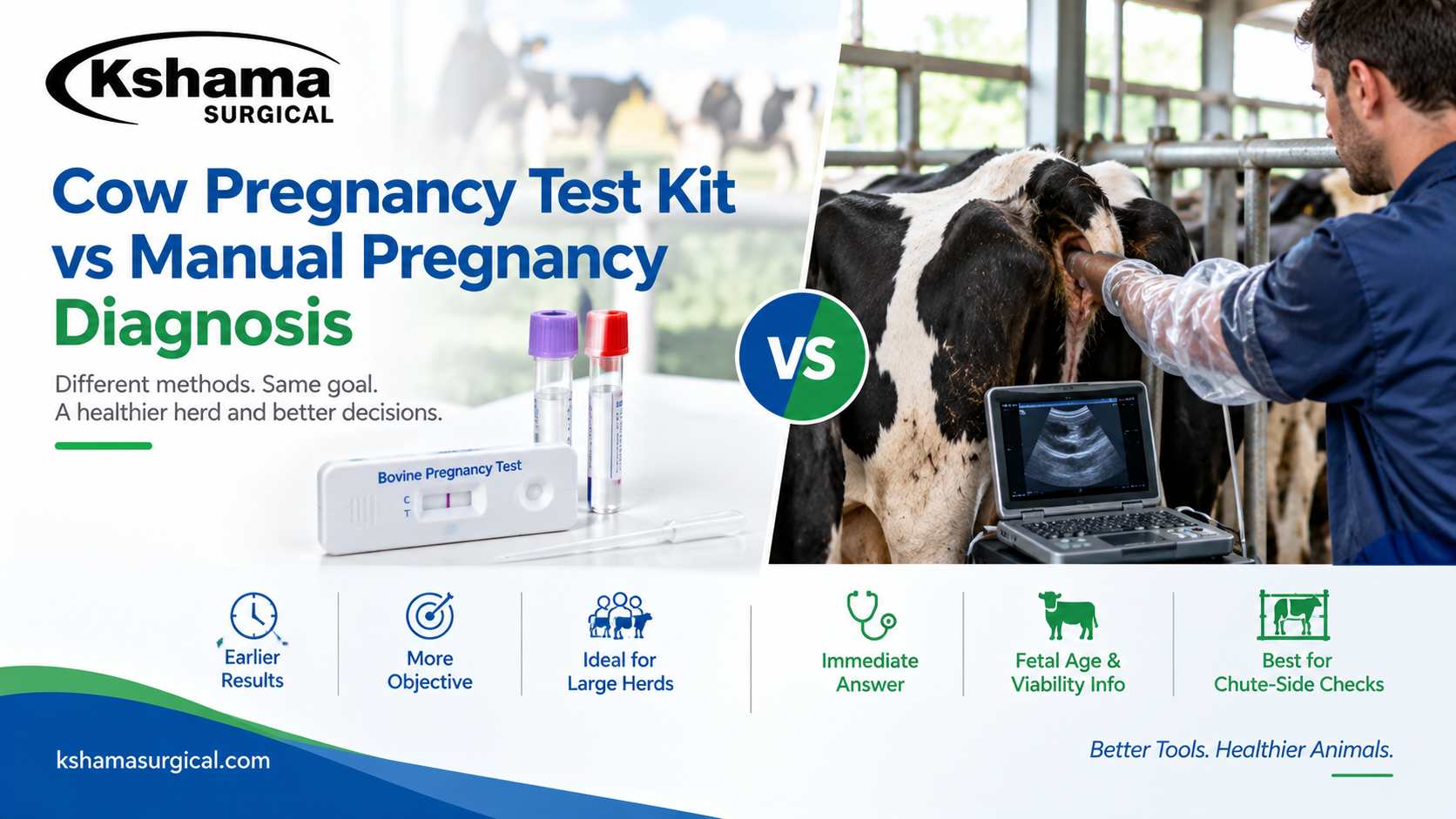
Finding open cows early saves feed, time and breeding-season days, so the choice between a cow pregnancy test kit and hands-on diagnosis is a real management decision. In short, a cow pregnancy test kit gives earlier and more objective results, while manual methods give an answer on the spot without waiting for a lab. Many herds end up using both. This comparison covers timing, accuracy, labour and cost, and it shows where AI equipment and related tools fit into a 2026 breeding programme.
Quick Comparison at a Glance
| Factor | Blood or milk test kit | Manual diagnosis (palpation or ultrasound) |
| Earliest reliable check | About 28 days after breeding | Ultrasound about 28 days, palpation about 30 to 40 days |
| Skill needed | Sample collection, kit instructions | Trained vet or technician |
| Result time | Minutes to a couple of days | Immediate |
| Labour on the day | Low | Higher, especially for palpation |
| Main risk | False results if sampled too soon after calving or breeding | Operator error, and abortion risk if palpated too early |
| Best for | Early screening and large herds | Chute-side checks and fetal age information |
The table gives the headline, and a cow pregnancy test kit leads on early screening. The sections below explain what sits behind each row.
How Does a Cow Pregnancy Test Kit Work?
A cow pregnancy test kit detects hormones or proteins in a blood or milk sample that rise when a cow is pregnant. The most common type looks for pregnancy-associated glycoproteins, usually shortened to PAGs. These are released by the placenta, so they appear in the bloodstream once the pregnancy is established. A study indexed on PubMed Central describes PAG blood tests that can determine status as early as 28 days after breeding.
Another type of cattle pregnancy kit measures milk progesterone. It is useful mainly for ruling out pregnancy, because low progesterone around the expected return to heat points to an open cow, while a high reading only suggests she may be pregnant.
Results from a bovine pregnancy test of this kind can come back in about 20 minutes with some rapid formats, or within a couple of days when samples go to a lab, according to the University of Florida’s Ask IFAS publication on beef cattle pregnancy diagnosis.
Timing rules that affect kit accuracy
Lactating cows can carry residual PAG from the previous pregnancy. The University of Florida guidance advises waiting until cows are at least 90 days after calving before relying on a PAG result, and at least 30 days after breeding. Sampling too early is the most common reason a cow pregnancy test kit gives a confusing answer.
How Does Manual Pregnancy Diagnosis Work?
Manual diagnosis means a trained person examines the cow, either by rectal palpation or by transrectal ultrasound. Both are standard practice and neither needs a lab.
Rectal palpation is the oldest and most common method. According to Ask IFAS, a diagnosis can be made from 30 to 40 days after breeding depending on the technician’s skill, and it can continue until full term at roughly 283 days. For cows fewer than 45 days post-breeding, the same source recommends that only licensed vets or embryologists palpate, because of the risk of causing abortion.
Ultrasound is about as accurate as palpation but can be used earlier, from roughly 28 days. It also shows fetal age and can reveal fetal viability. This kind of pregnancy detection cow herds benefit from most is when a vet needs more than a yes or no answer.
Where Does Each Method Win?
Speed and timing
A bovine pregnancy test using blood samples and an ultrasound scan both reach back to about day 28. Palpation needs a few extra days. Manual methods win on immediacy, because the answer is available while the cow is still in the crush.
Accuracy and false results
Both approaches are reliable when done correctly, and the failure points differ. A cow pregnancy test kit can mislead if the cow is sampled too soon after calving or breeding. Manual diagnosis depends on the operator, and an inexperienced hand can miss an early pregnancy. A common safeguard is to confirm uncertain results with ultrasound.
Cost and labour
Palpation is described as physically demanding, but it can be cost-effective when a vet is already on the farm. A cow pregnancy test kit moves the effort to sample handling, which suits large groups where one person can draw blood while others manage the animals. Costs vary widely by region, test brand and herd size, so request local quotes instead of relying on a general figure.
Information beyond pregnant or open
Ultrasound gives fetal age and viability. A standard cow pregnancy test kit result is binary, and early pregnancy detection cow by cow also informs culling and rebreeding. If you need to sort cows into calving groups, manual ultrasound adds real value.
Which Method Suits Your Herd?
- Small dairy herds: palpation or ultrasound by a visiting vet is often simplest, since the vet may already be on site for fertility work, with a cow pregnancy test kit filling gaps between visits.
- Large beef herds: a blood-based cow pregnancy test kit or cattle pregnancy kit can screen many cows quickly, with ultrasound used to confirm doubtful results.
- Artificial insemination programmes: early testing at about 28 days lets you re-breed open cows sooner.
- Remote farms: a rapid cattle pregnancy kit reduces the wait for a vet visit, as long as the cows meet the postpartum timing rules.
The best approach is often layered. Screen early with a cow pregnancy test kit, then confirm and age the pregnancy by ultrasound or palpation later in gestation.
What Mistakes Should You Avoid?
Testing too early is the biggest one, whether you use a cow pregnancy test kit or a manual method. A second error is ignoring the 90 days postpartum window for PAG tests. Poor sample handling comes next, because contaminated or mislabelled samples ruin a result. Finally, do not treat one early negative as final without checking breeding dates, since a missed date can look like a failed test.
Keep breeding records tidy. The pregnancy detection cow herds can trust starts with accurate dates, because dates are what turn any test result into a useful decision.
Choosing Equipment for Your Breeding Programme
Using a cow pregnancy test kit is only one part of a good fertility routine. Kshama Surgical manufactures veterinary gynaecology instruments and artificial insemination equipment, and it can help you assemble the kit that matches your herd size and method. Browse the gynaecology instruments range or speak with the Kshama Surgical team to get help choosing the right option for your farm.
Frequently Asked Questions
How early can a cow pregnancy test kit detect pregnancy?
Blood PAG tests can work from around day 28 after breeding, provided the cow is at least 90 days past calving. Testing earlier than that raises the chance of an unreliable or false result, so confirm breeding and calving dates before you sample.
Is manual pregnancy diagnosis more accurate than a kit?
Neither is automatically better. Both are reliable when done correctly. Palpation depends on the operator’s skill, while kits depend on proper timing and clean sample handling. Ultrasound adds fetal age and viability that a kit cannot provide.
Can I use a bovine pregnancy test on a cow that just calved?
Be careful. Residual PAG from the last pregnancy can stay in the blood for up to 90 days after calving and cause false positives. Wait until the cow is at least 90 days postpartum before you rely on a blood test result for her.
Is rectal palpation safe for early pregnancy?
Palpation before 45 days carries a risk of abortion, so it should only be done by a licensed vet or very experienced technician. If you want an early answer without that risk, a kit or an ultrasound scan is usually the safer route.
How long is a cow pregnant?
A cow carries her calf for roughly 283 days. Early testing lets you find open cows within about 30 days of breeding, instead of waiting through the entire gestation to learn that rebreeding was needed and breeding days were lost.
Which tool does a small farm need for artificial insemination?
A small farm usually needs an insemination gun, sheaths and a way to store semen. If you are building a basic kit, Kshama Surgical can advise on the AI equipment that matches your herd size, breeding method and budget before you order.
Should I test every cow in the herd?
Testing every cow is best practice, because open cows cost feed and breeding time. Where budgets are tight, check at least the cows bred by artificial insemination, since their breeding dates are the most precise and results are easiest to trust.
