
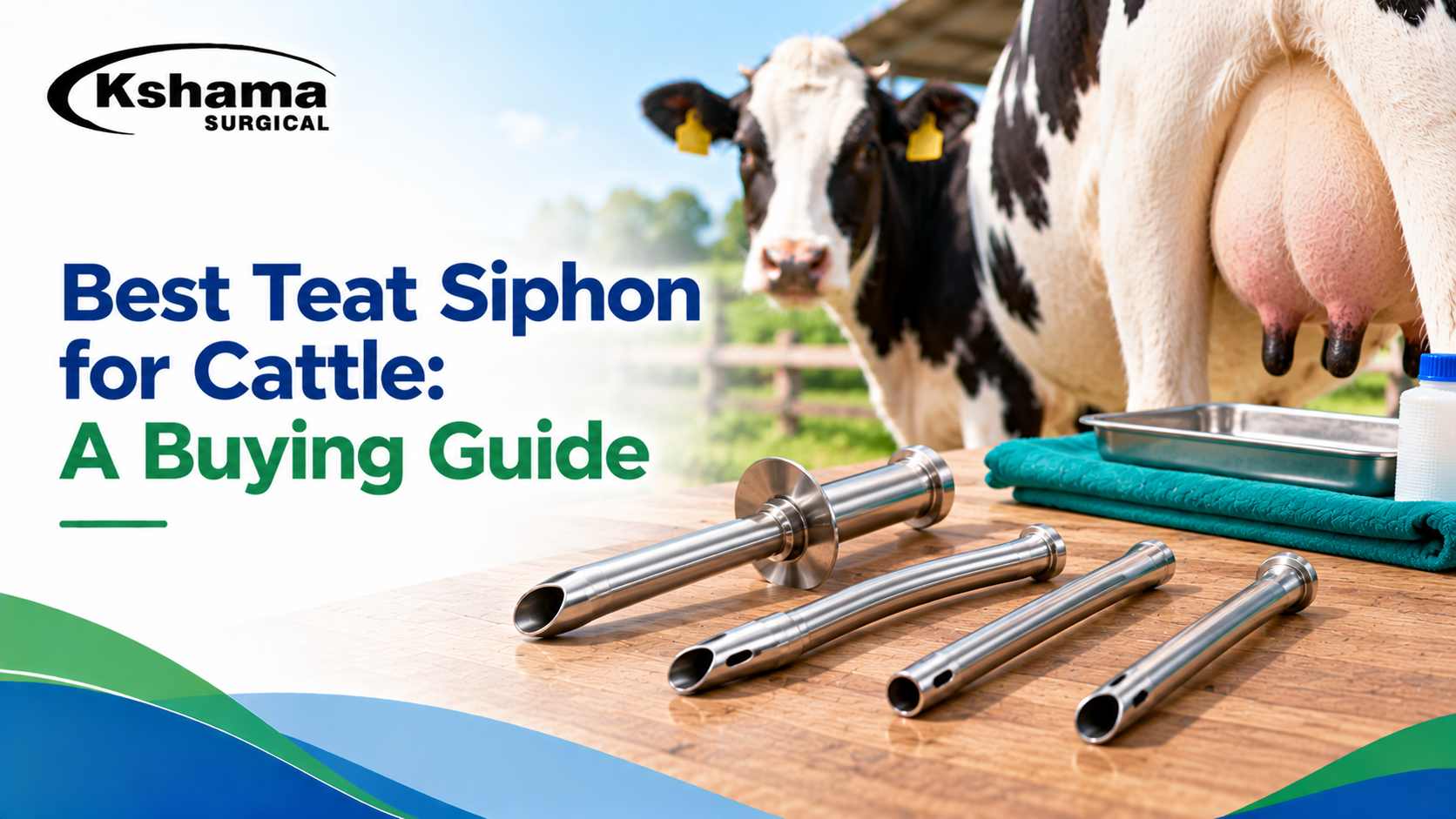
When a quarter will not let milk out, a teat siphon can be the tool that keeps a bad day from becoming a chronic problem. The wrong teat siphon, however, can slip, scratch the lining of the canal or block at the inner end. This 2026 guide explains what a teat siphon does, what to look for in the design and material, and what shapes the cost. Kshama Surgical stocks veterinary teat instruments for farms and clinics, and the points below are the ones we would want any buyer to check first.
What Is a Teat Siphon and When Is It Used?
A teat siphon is a short, narrow tube that is passed through the teat canal so that milk or fluid can drain from the quarter. In some markets it is called a teat syphon, and you will also see it listed as a milking tube, teat cannula or milk draining tube. The purpose is the same in every case: to open a path for fluid when normal milking is blocked.
Typical situations include a swollen or injured teat after trauma, a narrowed canal, or drainage of thick secretions during treatment of mastitis under veterinary direction. A patent describing udder drainage tubes points out two long-standing weaknesses of simple smooth tubes: they tend to slip out of the teat, and the inner opening can block so that fluid cannot drain.
One caution before buying: a teat siphon is not a cure and should not become a daily habit without veterinary advice. A Frontiers in Veterinary Science case report describes a cow whose teat stenosis was most likely caused by repeated cannulation by the owner. If milk will not pass, the underlying cause needs to be found.
What Types Are Available?
Most teat siphon designs fall into a few groups, and the design differences affect safety more than price does.
- Plain rigid tubes: a smooth metal tube, usually stainless steel, that is simple and easy to sterilise but can slip if it has no stop.
- Tubes with a flange or collar: a flared end that sits outside the teat and prevents the tube from sliding in.
- Tubes with side openings: extra holes near the tip that keep flow going if the end opening blocks.
- Disposable plastic cannulas: single-use, convenient for avoiding cross-contamination, but not suited to heavy repeated use.
Each of these has a place. A farm with many animals and a vet on call may prefer reusable metal tubes with a collar, while a single-cow owner may favour a disposable option.
How Do You Choose the Right One?
Choosing the right teat siphon comes down to four checks.
Material and finish
For a reusable teat siphon, stainless steel is the practical choice because it tolerates repeated cleaning and sterilisation. Look at the tip under good light. It should be smooth and rounded with no burrs, because a rough edge can damage the teat lining. Ask the supplier which grade is used and how the surface is finished. A milk draining tube made from poor metal will pit and corrode, which makes it harder to keep clean.
Safety features
A flange or retaining collar is the most important design feature on any teat siphon. A published case from Bhutan shows why: a farmer inserted a teat siphon on 25 November 2017 to drain pus from an infected quarter, but the tube slipped into the mammary gland when the cow moved. Manual removal failed, and the animal was referred for surgery three days later. A collar would have reduced that risk. You can read the full account in the Bhutan Journal of Animal Science.
Size
A teat siphon must fit the teat canal without force. A tube that is too thick can stretch or injure the sphincter, and one that is too thin may block easily. Ask for the length and outer diameter, and compare them with the cattle you manage. Dairy cows and smaller cross-bred animals can differ noticeably.
Sterilisation
Choose a teat siphon with no tight crevices so it can be washed, brushed and sterilised thoroughly between uses. Smooth bores are easier to clean than narrow, ridged ones.
What Influences the Cost of a Milk Draining Tube?
Prices vary widely, and a single teat siphon price rarely tells the full story. These factors decide where a teat siphon sits in the market.
- Material: stainless steel costs more than plastic, but it can be reused many times.
- Finish: a polished, burr-free surface takes more manufacturing time.
- Design: models with collars and side openings cost more than plain tubes.
- Quantity: buying in packs usually lowers the cost per piece.
- Source: buying directly from a manufacturer often avoids extra layers of margin.
- Packaging and shipping: protective packaging and delivery distance affect the final total.
When you compare a teat siphon price from two sellers, check that you are looking at the same material and the same design. A cheaper tube without a collar is not equivalent to a slightly dearer one with a collar. Think about cost per use too, because a reusable stainless teat siphon spreads its price over many procedures.
What Is the Safe Way to Use One?
This is a general overview and does not replace veterinary advice. Use only on the guidance of your vet.
- Restrain the cow safely and keep her calm.
- Wash your hands and clean the teat end thoroughly, then disinfect it.
- Use a sterile teat siphon, or a new disposable one.
- Insert it gently through the canal. Never force it, and stop if you meet firm resistance.
- Let the milk or fluid drain, supporting the tube throughout.
- Remove the tube slowly while holding it, then clean the teat end again.
- Record the quarter treated and tell your vet if the problem returns.
What Mistakes Should You Avoid?
The most serious mistake is using a teat siphon without a stop, which risks the loss inside the gland described earlier. Others include forcing a tube past resistance, reusing an unsterilised tool between cows, and relying on repeated cannulation instead of finding the cause. A teat syphon that is bent, burred or worn should be replaced rather than repaired. Finally, do not leave a tube in place unattended unless a vet has specifically advised it.
How Should You Clean and Store It?
Rinse the teat siphon immediately after use so milk does not dry inside the bore. Brush it with a clean, narrow brush, wash it in warm detergent water, rinse well and sterilise using the method your vet recommends. Dry the tool completely and store it in a clean, covered container. Inspect it each time for scratches, bends and burrs.
Are There Alternatives to Drainage Tubes?
Sometimes the answer is yes, and that decision belongs to your vet. Depending on the cause, a veterinarian may use a teat dilator, a wax teat bougie or even teat surgery rather than a plain drainage tube. The Frontiers case report mentioned above describes a quarter treated with a wax bougie and bandaging after the mastitis was brought under control. A teat siphon is best seen as one tool among several, not a universal fix.
What Does a Buying Checklist Look Like?
Before you order, run through these points.
- Is the tip smooth and rounded, with no burrs?
- Does the design include a flange or collar?
- Are the length and diameter listed, and do they suit your cattle?
- Is the material stated clearly, and can it be sterilised the way you plan to?
- Are side openings included to keep flow going?
- Does the seller state a teat siphon price that matches the specification, with bulk options?
- Can you ask the manufacturer questions before buying?
A seller who lists dimensions, material and finish openly is usually easier to trust than one who shows only a photograph and a price.
When Should You Call the Vet?
Call your vet if milk will not pass, if the quarter is hot, hard or swollen, if the milk shows clots or pus, or if the cow is off her feed or running a fever. These signs point to a problem that a drainage tube alone will not fix. Delay can turn a simple obstruction into a chronic one, and a quarter that is damaged early may never return to full production.
How Can You Spot a Poor-Quality Tube?
A few warning signs show up quickly when you handle a tube in person or study clear photos.
- Rough or uneven polish, which suggests the surface was rushed and may harbour residue.
- Visible weld lines or gaps where the collar joins the tube.
- A collar that rattles or can be twisted loose.
- Burrs at the tip or at the side openings.
- No stated material, length or diameter in the listing.
- Spots of discolouration or early pitting on a new piece.
Any one of these is a reason to ask questions. Together they suggest a product that will be hard to keep clean and may not last. Reputable sellers are usually happy to send extra photographs or answer questions about finishing before you commit to an order, and that openness is itself a useful quality signal.
How Many Should a Farm Keep?
Most farms do well with two or three clean, sterilised units in a covered container, so one is always ready while another is being cleaned. A larger dairy may keep more, sized for different cattle. Buying in a pack can also lower the teat siphon price per piece, as long as every unit in the pack meets the same specification. Label the container clearly and keep it away from the milking parlour’s dirt and moisture.
Buying from Kshama Surgical
Kshama Surgical is an India-based manufacturer and exporter of veterinary instruments, with teat instruments listed in a dedicated category. If you tell the team what you are treating and how many animals you manage, they can help you shortlist a suitable teat siphon design. You can explore the full instrument shop or contact the team to ask about sizes, materials and bulk quantities.
Frequently Asked Questions
What does a teat siphon do?
It opens a drainage path through the teat canal so milk or fluid can leave a blocked quarter. It should be used under veterinary guidance, because careless or repeated use can injure the canal and lead to infection or narrowing of the teat.
Is a teat syphon the same as a milking tube?
In most cases, yes. Teat syphon, teat siphon, milking tube, teat cannula and milk draining tube are different names for similar instruments. Always compare the actual length, diameter and design instead of relying on the name in a listing.
Why does the collar matter?
A flange or collar rests outside the teat and stops the tube sliding inside. Without one, a tube can slip into the udder, and removal sometimes needs surgery. For anyone buying a reusable tube, a collar is the single most useful safety feature.
How much does a teat siphon cost?
It depends on the material, design, finish and quantity. Stainless steel with a collar costs more than plain plastic. Ask each seller for the full specification and compare equal designs, since a lower figure can hide a weaker build.
Can I use one every day on a cow with a blocked teat?
Not without veterinary advice. Repeated cannulation has been linked to teat stenosis in a published case report. If a quarter keeps needing drainage, your vet should find the underlying cause and decide on the right treatment plan for the cow.
What material is best for a reusable tube?
Stainless steel is the usual choice for reusable tubes because it can be cleaned and sterilised many times. Kshama Surgical can tell you which grade and finish apply to its teat instruments, so you can match them to your cleaning routine.
How do I know the size is right?
The tube should pass through the canal easily, without force. Ask your vet about the teat, then compare the length and outer diameter listed by the seller. If you are unsure, order a small selection of sizes so you can test what fits.
