
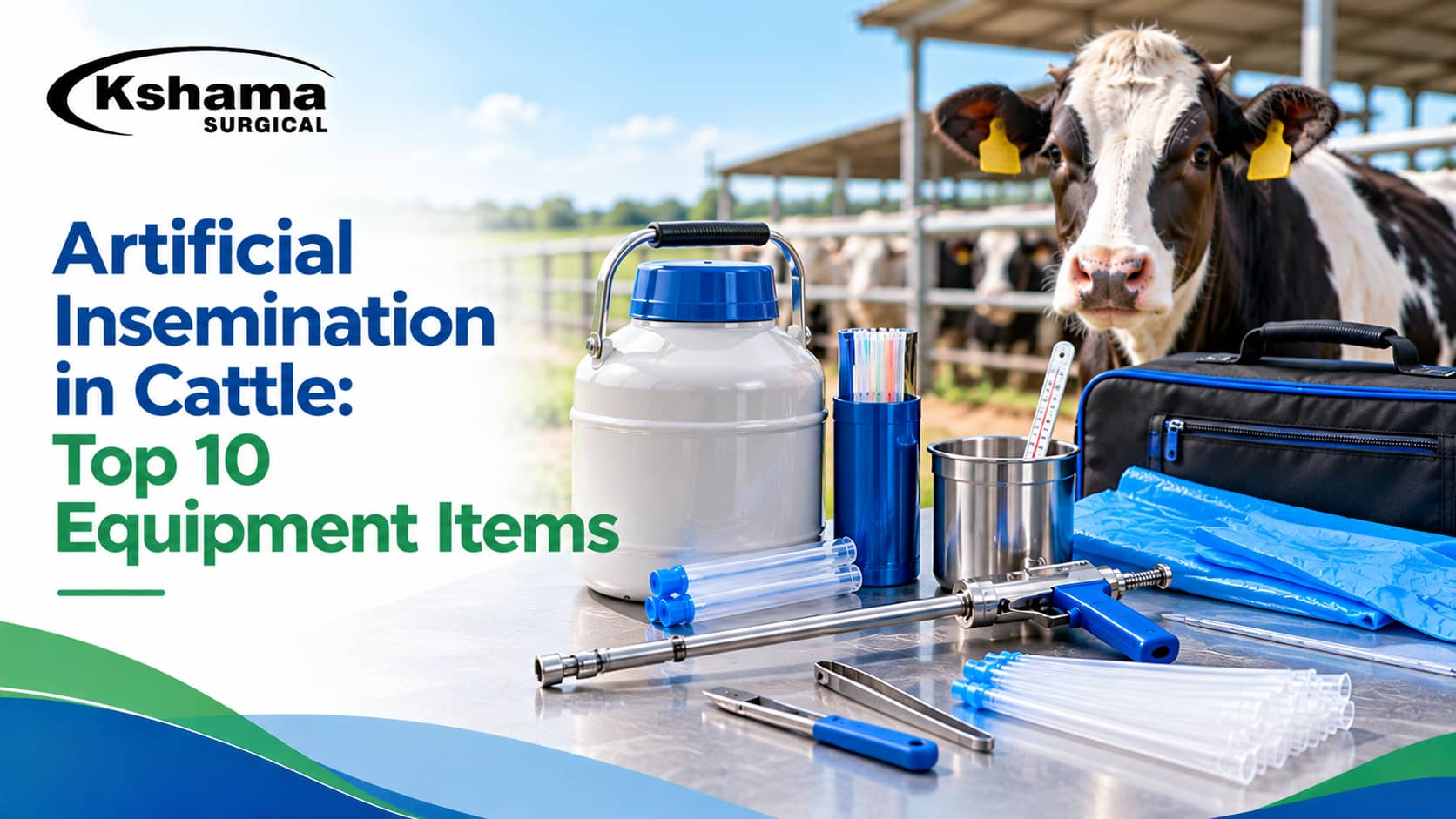
Artificial insemination in cattle depends on a short list of tools that protect semen from storage to delivery, and the ten items below cover what a working setup actually needs. Some are used on every cow, such as the gun, sheath and gloves, while others, such as the nitrogen container, sit in the background and decide whether the semen is still viable on the day. This guide describes each item, explains where it fits in the sequence, and shows how the equipment relates to the results you can expect from artificial insemination in cattle.
How Artificial Insemination in Cattle Works, Step by Step
Knowing the sequence of artificial insemination in cattle makes it easier to see why each tool exists. The outline below is a simplified overview of the AI procedure in cows; a trained technician follows the semen supplier’s instructions and veterinary guidance.
- Detect heat and choose timing. Insemination is planned around the cow’s heat, so observation and records come first.
- Prepare the equipment. The gun, sheaths, gloves and thawing items are laid out clean and dry.
- Retrieve and thaw the straw. The straw is lifted from the nitrogen container with forceps and thawed following the semen supplier’s guidance.
- Load the gun. The dried straw is cut squarely, placed in the gun and covered with a fresh sheath.
- Deliver the semen. With a gloved arm guiding the cervix, the technician passes the gun and deposits the dose in the uterine body.
- Record and clean up. Details are noted, disposables are discarded and the gun is cleaned and dried.
This is the core AI procedure in cows, and a university extension guide on tips for successful artificial insemination in beef cattle describes the basic kit and notes, among other points, that a loaded gun should be kept warm and protected before use.
The Top 10 Equipment Items
Each item below earns its place in artificial insemination in cattle for a specific reason, and they are listed roughly in the order they are used.
1. Insemination Gun
The gun holds the straw and carries it through the cervix. Common lock styles include auto-lock, O-ring and French-lock, and the right one depends on your sheaths and straw format. Kshama Surgical lists an insemination gun in stainless steel with an auto-lock design, as well as O-ring, mini French and camera versions.
2. Disposable Sheaths
Each sheath covers the loaded gun and is used once. It must match the gun’s lock and the straw size. Packs are sold in 50 and 100 pieces, and in a 500-piece combination.
3. Shoulder-Length Gloves
Long gloves protect the technician and the animal during rectal guidance of the cervix. Listings run in lengths of 34, 35 and 36 inches, in colour-coded packs of 100.
4. Liquid Nitrogen Container
This vacuum-insulated vessel keeps frozen straws at cryogenic temperature. It is the item most closely tied to semen viability in artificial insemination in cattle, because a container that runs low on nitrogen can ruin the whole inventory. Kshama Surgical lists a liquid nitrogen AI container alongside covers for carrying it.
5. Goblets and Canisters
Goblets organise straws by sire inside the container so each one can be found quickly, without lifting the whole stock into warmer air. Labelling each goblet clearly saves time and reduces handling. Kshama Surgical lists reusable plastic goblets in packs of 50.
6. Transfer Funnel
A funnel is used when topping up the container with liquid nitrogen, which reduces spillage and splashing during refilling.
7. Thawing Flask and Thermometer
Thawing needs a controlled water bath, so a flask and a reliable thermometer matter more than they appear to. Thawing at the wrong temperature or for the wrong time is a recognised cause of lost semen quality, which is why suppliers publish instructions.
8. Straw Cutter and Forceps
A clean, square cut and forceps for lifting straws keep the dose intact and the rest of the stock cold. A rough cut can cause leakage during loading.
9. Gun and Sheath Containers
Dedicated holders protect the gun tip and keep sheaths clean between farms. Kshama Surgical lists a holder for a single gun and a holder for 50 sheaths.
10. Carry Bag or Complete Kit
A padded bag keeps everything together in the vehicle. A ready-packed set suits new buyers because the components are chosen to work together, and Kshama Surgical lists a complete AI kit for veterinary use.
What Shapes the AI Success Rate
Equipment is only one part of the picture, and it would be misleading to promise a particular result from artificial insemination in cattle. The AI success rate in any herd depends on several factors working together, and good tools mainly protect the ones within a technician’s control.
- Heat detection and timing: inseminating at the wrong point in the cycle is a major cause of failure in artificial insemination in cattle, whatever equipment is used.
- Semen handling: correct storage, thawing and loading preserve viability.
- Technician skill: accurate placement and gentle passage through the cervix take practice.
- Hygiene: clean sheaths, gloves and instruments reduce the risk of introducing infection.
- Cow health and condition: nutrition, recent calving and general health influence fertility.
Because so many variables are involved, farms that track services and results over time learn far more about their own AI success rate than any general figure can tell them.
Training and Technique in Artificial Insemination in Cattle
Artificial insemination in cattle is a skilled task, and good equipment cannot compensate for a poorly trained operator. Veterinary colleges, state animal husbandry departments and dairy cooperatives commonly run courses on reproductive anatomy, heat detection and instrument handling. A technician who understands the anatomy and practises regularly will get more from the same kit than one who does not.
Choosing a Setup That Fits Your Herd
Not every farm practising artificial insemination in cattle needs all ten items on day one. Start with the instruments used on every cow, then add storage and accessories as the number of services grows. The table compares three common arrangements.
| Question | Field technician kit | Starter farm kit | Herd-level setup |
| Core items | Gun, sheaths, gloves, bag | Starter kit with matched parts | All ten items |
| Semen storage | Shared or nearby centre | Shared or nearby centre | Own nitrogen container |
| Best suited for | Visiting technicians | New or small farms | Larger herds and cooperatives |
| Main watch point | Spare sheaths and gloves | Format compatibility | Nitrogen refill schedule |
Your cattle breeding method, whether using your own storage or collecting straws on the day, should drive the kit. For many small farms, a shared storage point and a matched kit is the practical starting point, while a larger herd with its own cattle breeding method and regular inseminations justifies owning a container. Scale matters in artificial insemination in cattle because a container only pays back when it is used often. For example, a farm serving a handful of cows each month will usually do better with shared storage, while a cooperative serving many farms will not.
Buying and Maintenance Tips
- Check compatibility first. Confirm straw format, gun lock and sheath type before ordering anything in bulk.
- Test a small pack. Fit sheaths to your own gun and check the plunger runs smoothly.
- Read prices per piece. Compare cost per sheath or glove, not the headline pack price.
- Plan nitrogen logistics. Know who refills the container and how often, before you buy one.
- Clean and dry the gun after every use, and store it in a holder so the tip is protected.
- Keep a logbook of services, sires, refills and consumable stock.
- Think in seasons. Estimate how many cows you will serve and size your consumables for a full season of artificial insemination in cattle.
Frequently Asked Questions
What equipment is needed for cattle breeding by AI?
For artificial insemination in cattle, the core items are an insemination gun, sheaths, shoulder-length gloves, a liquid nitrogen container, goblets, a transfer funnel, a thawing flask with thermometer, a straw cutter with forceps, holders for guns and sheaths, and a carry bag. Smaller setups start with fewer items.
Is a kit better than buying items separately?
A kit suits beginners because the parts are chosen to work together, which avoids mismatches. Buying separately suits experienced users who already own some items or need specific lock styles. Whichever you choose, confirm compatibility between gun, sheath and straw format before ordering.
What does the AI procedure in cows involve?
The procedure involves detecting heat, thawing a straw, loading the gun with a fresh sheath, passing it through the cervix under guidance and depositing semen in the uterine body. It should be performed by a trained technician following veterinary guidance and the semen supplier’s instructions.
Can equipment alone improve results?
Equipment helps by protecting semen and hygiene in artificial insemination in cattle, but results also depend on heat detection, timing, technique and cow health. Good tools reduce avoidable losses, yet they cannot compensate for missed heat or poor placement, so training and record keeping matter just as much.
How often should the nitrogen container be checked?
Check the level on a fixed schedule and refill before it falls close to the top of the canisters. The right interval depends on the container and how often it is opened, so follow the manufacturer’s guidance and keep a refill log.
Do guns and sheaths need to match?
Yes. The sheath must suit the gun’s lock style and the straw size in use. A poor fit can cause leakage or a sheath that rotates, so test a few on your own gun before buying a large quantity, and ask the supplier to confirm compatible lock types.
Where can I buy equipment in India?
Veterinary suppliers and manufacturers sell equipment for artificial insemination in cattle online and through dealers. Choose a seller who lists sizes, lock types and pack contents clearly and who gives written quotations for bulk orders, including delivery to your location and spare consumables.
Conclusion
Reliable artificial insemination in cattle comes from matching a small set of tools to a disciplined routine. The gun, sheaths and gloves do the work at the cow side, while the nitrogen container, goblets, funnel and thawing items protect the semen beforehand. Together they support a sound cattle breeding method, though success in artificial insemination in cattle still depends on timing, technique and herd health, which is why training and record keeping belong alongside the equipment.
Before ordering, decide whether you need your own semen storage, confirm your straw format and gun lock, and list the consumables you will use in a season. Explore the Kshama Surgical AI equipment range, read more practical guides on the Kshama Surgical blog, or contact the team for help choosing a setup for your herd.
