
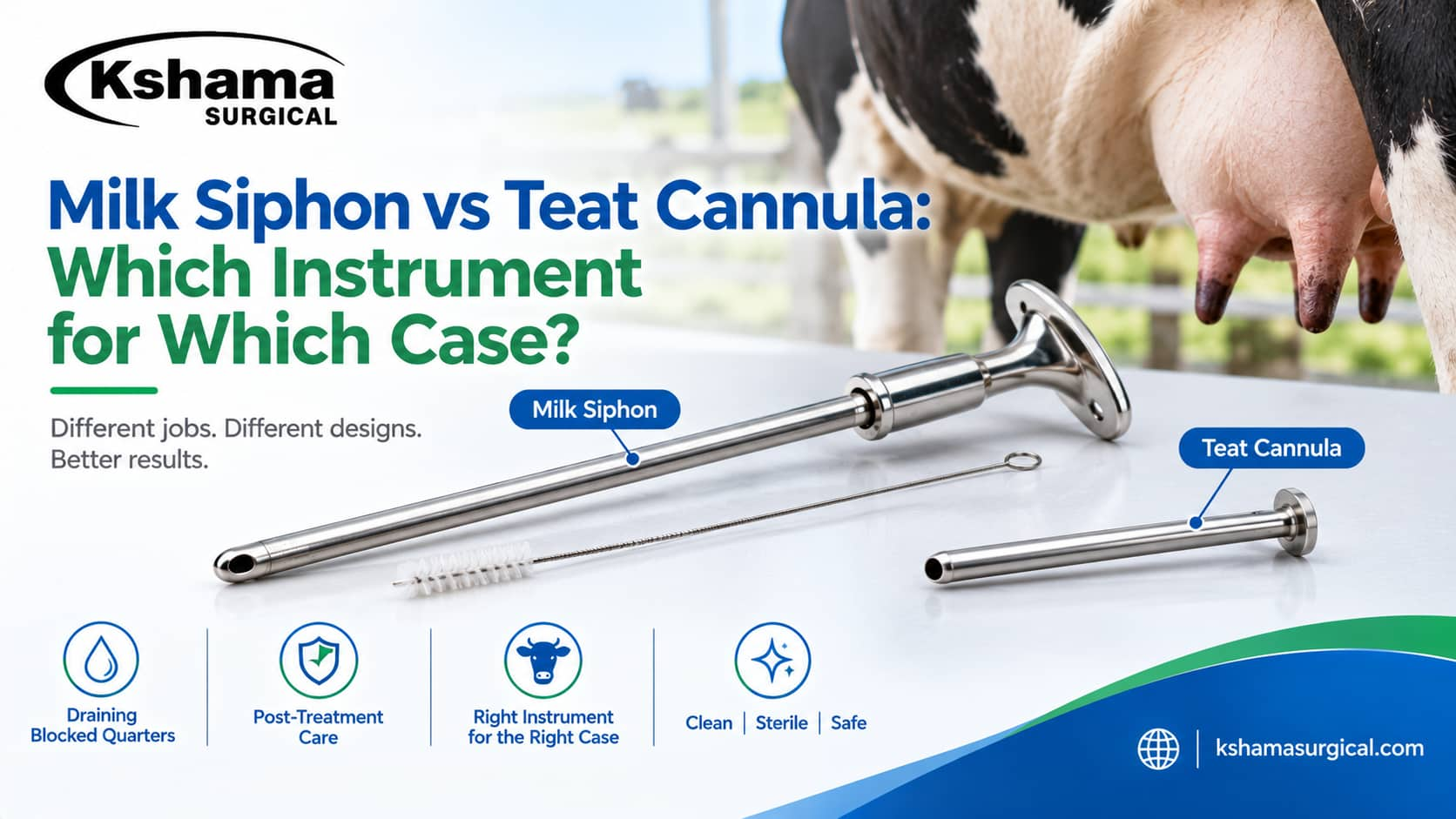
A cow with a blocked teat cannot wait for a convenient time. Every hour that milk stays trapped in the quarter, pressure builds and the risk of mastitis rises. Two instruments from the veterinary teat instruments range are used most often in these situations: the milk siphon and the teat cannula. They look alike to a first-time buyer, but they are built for different jobs. This 2026 guide explains how each one works, where they overlap, and how to match the right instrument to the case in front of you.
What Is a Milk Siphon?
A milk siphon is a rigid, hollow stainless steel tube, usually fitted with a handle, that is passed gently through the teat canal to drain milk from a quarter that will not release it normally. In daily practice it works as a milk draining instrument for obstructed or hard-milking teats.
As a milk tube for cows goes, a siphon is the longer and more controlled option. The handle gives the operator control over depth and angle, which matters because the lining of the teat canal is delicate. As a milk draining instrument, a good siphon also comes with a thin cleaning wire. Milk residue dries inside a narrow lumen quickly, and a blocked tube is useless and unhygienic. The milk siphon with handle and cleaning wire offered by Kshama Surgical is supplied as a stainless steel pack of two, which suits a farm that wants a spare on hand.
What Is a Teat Cannula?
A teat cannula is a short, smooth-ended tube designed to enter the teat canal and either keep it open or allow controlled drainage and, when a veterinarian directs it, medication delivery. It is lighter than a siphon and normally has no handle, so it is held directly at the teat end.
Farmers sometimes ask for a milk tube for cows without knowing which of the two they need. That is understandable, because both are tubes that go into the teat. The difference lies in length, handling and purpose. A teat cannula pack of three is the usual choice when a teat has just been treated and the canal has to stay patent while it heals.
How Do You Choose Between a Milk Siphon and a Teat Cannula?
The quick answer: use a milk siphon when the main problem is milk that will not come out, and use a teat cannula when the main problem is keeping the canal open or delivering treatment. The condition of the teat decides the rest.
Cases that usually point to a milk siphon
- A quarter that is full but delivers little or no milk by hand
- A hard-milking teat where the canal is narrow but still passable
- Repeated draining needed during recovery, where the handle gives steadier control
Cases that usually point to a teat cannula
- Keeping the canal open after teat surgery or dilation
- Gentle drainage of a small amount of milk
- Infusion of a medicine prescribed by a veterinarian
Neither instrument fixes the underlying cause. Scar tissue, a membrane across the canal, a teat tumour or a milk stone may need correction with a teat dilator or surgery. If an instrument does not pass without resistance, stop and call a veterinarian.
Milk Siphon vs Teat Cannula: Side-by-Side Comparison
The table below summarises how the two compare in practice. It describes the instrument types in general; confirm exact dimensions with your supplier before ordering.
| Feature | Milk siphon | Teat cannula |
| Typical build | Longer steel tube with handle | Shorter, lighter smooth-ended tube |
| Main purpose | Draining milk from a blocked quarter | Keeping the canal open, gentle drainage, vet-directed infusion |
| Handling | Handle gives control over depth | Held at the teat end, no handle |
| Cleaning | Cleaning wire clears the lumen | Rinse through, then sterilise |
| Best suited to | Hard milkers and obstructed teats | Post-surgical care and short-term patency |
| Listed pack (Kshama Surgical) | Pack of 2, stainless steel | Pack of 3 |
The comparison shows why many farms and clinics keep both. Think of the milk siphon as the everyday milk draining instrument for a stubborn quarter, and the cannula as the precision tool for careful, short-contact tasks around healing. Neither is a general-purpose milk tube for cows, and treating them as interchangeable is where most problems begin.
Milk Siphon Price and Cost Considerations
Buyers naturally want to know the milk siphon price before they compare options. At the time of writing, Kshama Surgical lists its stainless steel pack of two at ₹250, and the teat cannula pack of three at ₹230. Check the live product pages, because listed prices can change.
Cost per piece matters less than cost per safe use. Stainless steel can be washed and heat sterilised repeatedly, so a reusable instrument that is cleaned properly after each animal is usually better value than a cheap tube that bends or corrodes. Look for a smooth, burr-free tip, because a rough edge can scratch the teat lining and invite infection.
How to Use a Milk Siphon or Teat Cannula Safely
Technique protects the udder more than the instrument does, and a milk siphon is only as safe as the hands and preparation behind it. The steps below describe the general sequence; a veterinarian should demonstrate them before a farmer attempts the procedure alone.
- Wash your hands thoroughly and wear clean gloves.
- Clean and disinfect the teat end, and let it dry.
- Use an instrument that has been cleaned and sterilised, never one lying open on a shelf.
- Insert the tip gently into the canal. Never push against resistance.
- Allow the milk to drain, withdrawing slowly once flow stops.
- Apply a teat dip, then wash the instrument, clear it with the cleaning wire if it has one, and sterilise it before storing.
The commonest mistakes are forcing the tip, skipping sterilisation between animals, and treating a quarter that already shows signs of infection without veterinary advice. Mastitis is inflammation of the udder tissue, and an unclean instrument is a direct route for bacteria into the quarter. The Mastitis overview on Wikipedia explains the condition well, and the National Mastitis Council publishes practical udder health resources for dairy herds.
Which Instrument Should a Dairy Keep on Hand?
Most dairies that deal with teat problems regularly keep a milk siphon for routine draining and a small stock of cannulas for post-treatment care. Two siphons and three cannulas, as the Kshama Surgical packs are supplied, let you rotate sterile pieces during the day instead of reusing an instrument that has not been cleaned. Clinics that treat many animals, or herds with a history of hard-milking heifers, may want more, and the same logic applies: a milk siphon should be ready, sterile and dry before it is needed, not washed in a hurry once the cow is already in the crush.
When to Call a Veterinarian
Call a veterinarian if the teat is hot, swollen or bleeding, if the milk is clotted or bloody, or if the cow shows pain when the teat is touched. These signs suggest infection or injury that an instrument cannot solve. A prompt examination often saves the quarter.
Choosing Instruments with Confidence
If you are unsure whether your herd needs a siphon, a cannula or both, speak with the team at Kshama Surgical. They can help you match the instrument to the animal and the case. You can contact Kshama Surgical for guidance or to place an order.
Frequently Asked Questions
What is the main difference between a milk siphon and a teat cannula?
A milk siphon is a longer, handled steel tube made to drain a blocked quarter. A teat cannula is shorter and lighter, used to keep the canal open or deliver treatment. Your veterinarian decides which suits the injury and the animal.
Can I use a milk siphon on any cow?
Canal size and condition vary between heifers, cows, buffaloes and goats. Use a siphon only after a vet confirms the canal is passable, never force it, and choose a size that matches the animal you are treating.
How do you sterilise a milk siphon?
Wash it and clear the lumen with the cleaning wire, then boil it or autoclave the stainless steel. Let it cool in a clean, covered tray before use. Soaking in disinfectant alone is a weaker option than heat sterilisation.
Is a milk tube for cows safe to use at home?
Only with training. A wrongly placed or unclean tube can damage the teat lining and carry bacteria into the quarter. Learn the technique from a veterinarian first, and always use properly cleaned and sterilised instruments.
How much does a milk siphon cost in India?
Prices vary with material and pack size. Kshama Surgical lists a stainless steel pack of two, with handle and cleaning wire, at ₹250 at the time of writing. Check the live product page for the current rate before ordering.
Can a teat cannula stay inside the teat?
A veterinarian may advise short-term retention after surgery, but leaving any tube in place without guidance raises the risk of infection and irritation. Follow the vet’s schedule and remove it exactly as directed, never earlier or later.
When should I stop and call a vet?
Stop if the teat is swollen, hot or bleeding, if the milk is clotted or bloody, or if the instrument will not pass easily. Forcing an instrument can cause permanent damage and may cost you the use of the quarter.
