
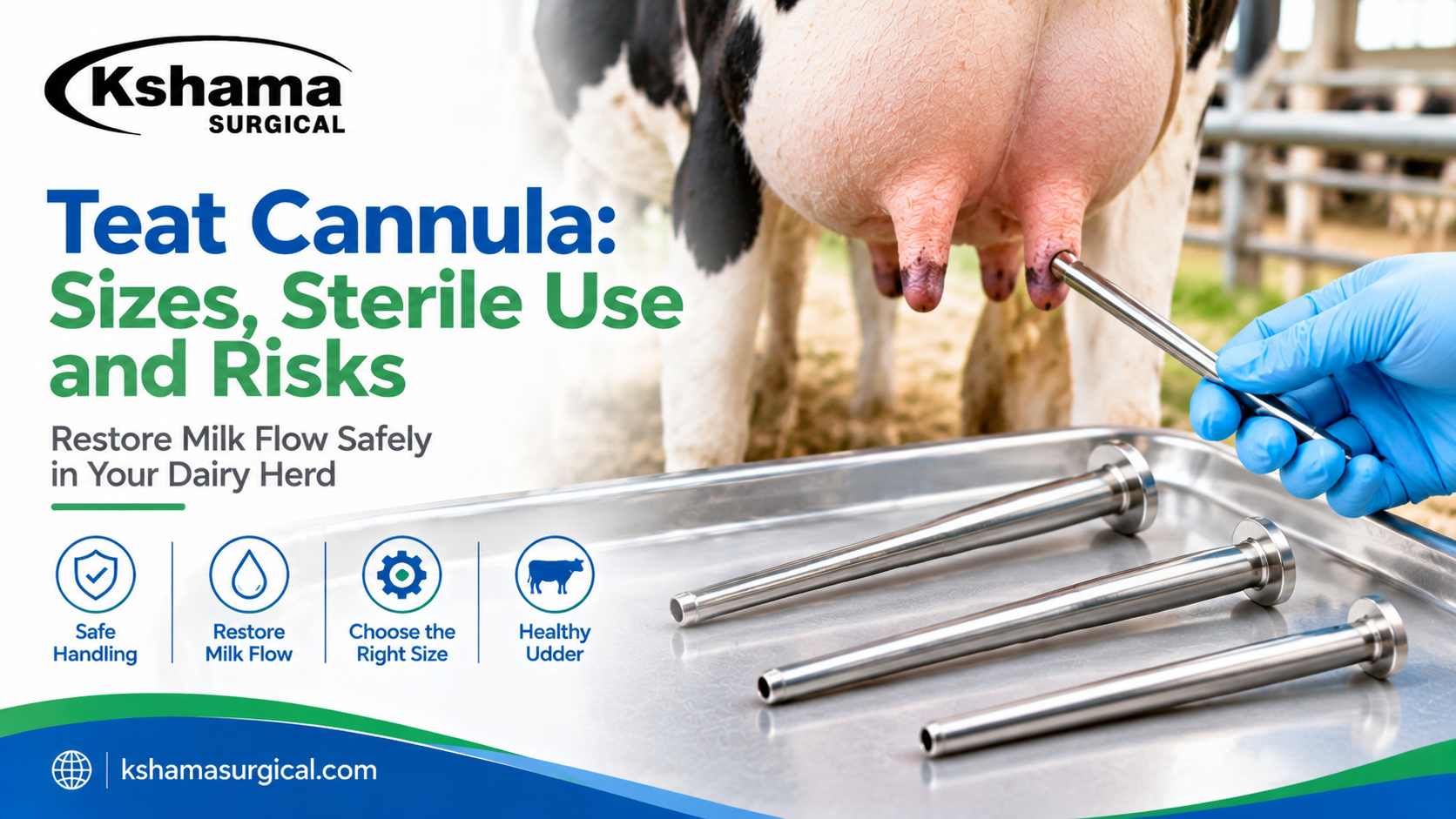
When a quarter stops giving milk, the cause is often a narrowed or blocked teat canal rather than a lack of milk. In those cases a teat cannula can restore flow, provided it is the right size, properly sterilised and used with care. A well-made teat cannula is a simple instrument, but small mistakes with it can cause real harm to the udder. This 2026 guide covers what the instrument does, how to choose a size, how to use it under sterile conditions, and the risks every dairy owner should understand.
What Is a Teat Cannula and When Is It Used?
A teat cannula is a short, smooth, hollow tube made for insertion into the teat canal of a cow, buffalo, goat or sheep. Veterinarians use it to drain milk from an obstructed teat, to keep the canal open while tissue heals after surgery, and to deliver prescribed medication into the quarter.
You may also hear it called a milk cannula on farms and in clinics. Some buyers simply ask for a teat tube, and a teat tube listing in a catalogue is usually the same product. The names overlap, but the purpose is consistent: a clean, controlled passage through the teat end.
Typical situations include:
- A teat that has been dilated or cut and must stay open during healing
- A canal narrowed by scar tissue after injury
- A quarter that holds milk because of a small obstruction
- Treatment of the quarter under veterinary instruction
How Can You Tell a Teat May Need a Cannula?
Look for a quarter that is full but delivers a thin or slow stream, a teat that feels hard or cord-like, or a cow that kicks or resists milking on one side. Calves and machine clusters may also show reduced flow from a particular teat. These signs point to an obstruction, but only a veterinarian can say what kind. Pressing hard on a blocked teat to force milk out, or using a pin or needle as a makeshift milk cannula, is a frequent and costly mistake. A purpose-made teat cannula has a rounded tip, a smooth bore and a polished surface, which a pin lacks.
How Does a Teat Cannula Restore Milk Flow?
A teat cannula restores flow by creating a temporary open path through the teat canal, also called the streak canal. This canal is the narrow channel between the cistern of the udder and the outside. A muscle called the sphincter closes it between milkings, which protects the quarter from bacteria.
When the canal is partly blocked, milk cannot leave at the normal rate. Common causes include scar tissue from a previous injury, a small growth, a milk stone, or swelling after a bruise. A smooth cannula passed gently through the canal lets trapped milk escape and, after surgery, holds the lumen open so that it does not close as it heals.
A teat cannula does not remove the cause. If the same quarter blocks repeatedly, the underlying problem needs to be diagnosed. Instruments such as a teat dilator or surgical correction may be needed in addition.
Teat cannula after surgery
After a teat has been cut, dilated or repaired, the healing canal tends to contract. A sterile cannula placed as the veterinarian directs keeps the passage open while the tissue settles. The schedule, the size and the duration are all decisions for the vet, because the right plan depends on the surgery and on how the animal heals. Owners should keep the animal clean, dip the teat as advised and report any swelling or discharge at once.
Teat Cannula Sizes: How to Choose the Right One
No single size suits every animal. The correct teat cannula depends on the species, the age of the animal and the condition of the canal. A heifer’s canal is generally narrower than that of a mature cow, and goats and sheep need much finer instruments than cattle.
Use these principles when choosing:
- Pick the smallest tip that drains the quarter. A larger tip is not better and may stretch the canal.
- Look for a smooth, rounded tip without burrs or rough joins. Run a fingertip over it before use.
- Choose stainless steel for instruments you intend to sterilise repeatedly, because it tolerates boiling and autoclaving.
- Keep spares. A pack with several pieces, such as the pack of three offered by Kshama Surgical, lets you rotate sterile instruments between animals.
- Ask the supplier for the exact tip and shaft dimensions before ordering, and confirm the choice with your veterinarian if the animal has had surgery.
Do not guess the size of a teat cannula from a photograph. A tip that is too wide cannot enter safely, and one that is too thin may bend or fail to hold the canal open.
How Do You Use a Teat Cannula Under Sterile Conditions?
The direct answer: clean the teat end, use a sterilised instrument, insert it gently without force, drain the milk, withdraw it slowly and disinfect the teat afterwards. Each step reduces the chance of introducing bacteria into the quarter.
- Prepare the animal. Restrain the cow calmly and keep the area clean and dry.
- Wash your hands and put on clean gloves.
- Clean the teat. Wipe the teat end with a suitable disinfectant and allow it to dry, since wet disinfectant can be carried inside.
- Select a sterile instrument. Remove the cannula from a covered tray or sterile pouch. Do not let the tip touch the floor, your clothing or the animal’s tail.
- Insert gently. Hold the teat, align the tip with the canal and advance slowly. If you feel resistance, stop.
- Drain and withdraw. Let milk flow, then remove the instrument slowly.
- Finish with a teat dip as advised by your vet.
- Clean and sterilise the cannula before storing it.
How to clean and sterilise the instrument
Rinse the cannula immediately after use so milk does not dry inside it. Wash with warm water and detergent, rinse well, and then sterilise by boiling or in an autoclave according to the manufacturer and your veterinarian’s advice. Store it dry in a covered, clean container. Instruments left in an open drawer or a bucket of water are not sterile.
What Are the Risks of Using a Teat Cannula?
The main risks are infection, injury to the canal lining and poor technique. The udder is easily infected, and the teat canal is its first line of defence. Anything that bypasses that barrier must be clean. The Udder article on Wikipedia gives a helpful overview of the anatomy involved, and the National Mastitis Council offers well-regarded guidance on udder health and hygiene.
Watch for these common mistakes:
- Forcing the tip against resistance, which can tear the lining and create scar tissue
- Using the same unsterilised instrument on several animals
- Leaving a cannula in place longer than the veterinarian advised
- Using damaged, bent or rusted instruments
- Inserting an instrument into a quarter that already shows signs of mastitis without professional advice
After any use, check the animal for heat, swelling, pain or abnormal milk over the next days. Clots, flakes, blood or a sudden fall in yield are reasons to call a veterinarian immediately.
Teat Cannula Price: What Affects the Cost?
Buyers searching for the teat cannula price will find it depends on several things: the material, the finish of the tip, the number of pieces in the pack and the manufacturer’s quality control. The teat cannula price also varies by pack size. At the time of writing, Kshama Surgical lists its teat cannula pack of three at ₹230. Always confirm the current figure on the product page.
Consider these points when comparing quotes:
- Stainless steel costs more than cheaper alloys but lasts longer and sterilises well.
- A smoother polish reduces the risk of scratching the canal lining.
- A multi-piece pack usually lowers the cost per instrument and gives you spares.
- Bulk orders for clinics and dairy cooperatives are often priced differently, so ask for a quote.
A very low price can be a warning sign if the tip is rough or the metal is thin. The real cost of a poor instrument shows up as a damaged teat or a lost quarter.
Hygiene Habits That Protect the Udder
Instruments are only one part of udder health. Clean bedding, dry teats at milking, consistent teat dipping and prompt treatment of any change in milk all reduce the chance that a blocked teat becomes a bigger problem. A teat cannula should fit into that routine, never replace it. Where several animals are treated in one session, treat the quarters with the fewest problems first, and use a freshly sterilised piece for each animal.
Related Instruments in a Teat Care Kit
A cannula rarely works alone. Depending on the case, a veterinarian may also use a milk siphon for draining, a dilator for widening a narrowed canal, or a complete surgical set. The teat surgery kit brings several of these instruments together for clinics that handle teat cases regularly. You can see the full selection in the veterinary teat instruments category.
Teat Cannula, Siphon or Dilator: Which Do You Need?
These instruments are often confused. A milk cannula keeps the canal open or drains small amounts. A milk siphon, which has a handle and is longer, is better suited to draining a quarter that is stubbornly full. A dilator widens a narrowed canal and belongs in the hands of someone trained to use it. If you are unsure which applies, describe the problem to your vet before buying, because the wrong teat tube can waste money and harm the animal.
What Should You Ask a Supplier Before Buying?
A short checklist saves money and avoids returns:
- Is the teat cannula stainless steel, and can it be autoclaved?
- Are the tips polished and free of burrs?
- How many pieces are in the pack, and are they identical in size?
- Can the supplier give tip dimensions?
- What is the replacement policy if a piece arrives damaged?
Reputable instrument suppliers answer these questions without hesitation. If they cannot, treat that as a reason for caution before you buy any teat cannula.
Storage and Aftercare
Keep every sterilised teat cannula in a closed, labelled container and replace any that show bending, pitting or rough tips. Record which animals were treated and when, so repeated blockages in the same quarter are noticed early. After treatment, keep the animal in a clean, dry area and follow the veterinarian’s milking and dipping routine.
Getting the Right Instrument
If you are unsure which size or pack suits your herd, speak to an expert before buying. You can contact the Kshama Surgical team for help choosing instruments for your animals.
Frequently Asked Questions
What is a teat cannula used for?
A teat cannula is passed into the teat canal to drain trapped milk, hold the canal open during healing after surgery, or deliver medicine prescribed by a veterinarian. It is a short, smooth, hollow tube with a rounded tip.
Is a milk cannula the same as a teat tube?
In everyday use, yes. Milk cannula and teat tube are common names for a smooth tube used in the teat canal. The exact length, tip shape and material can differ, so check the specification carefully before you buy.
How do I choose the right teat cannula size?
Choose the smallest smooth tip that drains the quarter. Heifers, goats and sheep need finer instruments than mature cows. Confirm the exact tip dimensions with your supplier and your veterinarian before you place an order.
How do you sterilise a teat cannula?
Rinse it straight after use, wash it with detergent, then boil it or autoclave it as advised. Store it dry in a covered, clean container. Never reuse an instrument that has only been wiped with a cloth between animals.
What is the teat cannula price in India?
Price depends on material, tip finish and pack size. Kshama Surgical lists a pack of three at ₹230 at the time of writing. Check the product page for the current rate, and ask about quotes if you need larger quantities.
Can a teat cannula cause mastitis?
It can if it is unsterile or forced in. Bacteria carried through the canal can infect the quarter and cause inflammation. Clean instruments, gentle technique and veterinary guidance greatly reduce that risk for every animal.
How long can a cannula stay in the teat?
Only as long as your veterinarian specifies. Short retention may be advised after surgery, but leaving a tube in for longer raises the risk of infection and irritation. Never decide the duration yourself or extend it on your own.
