
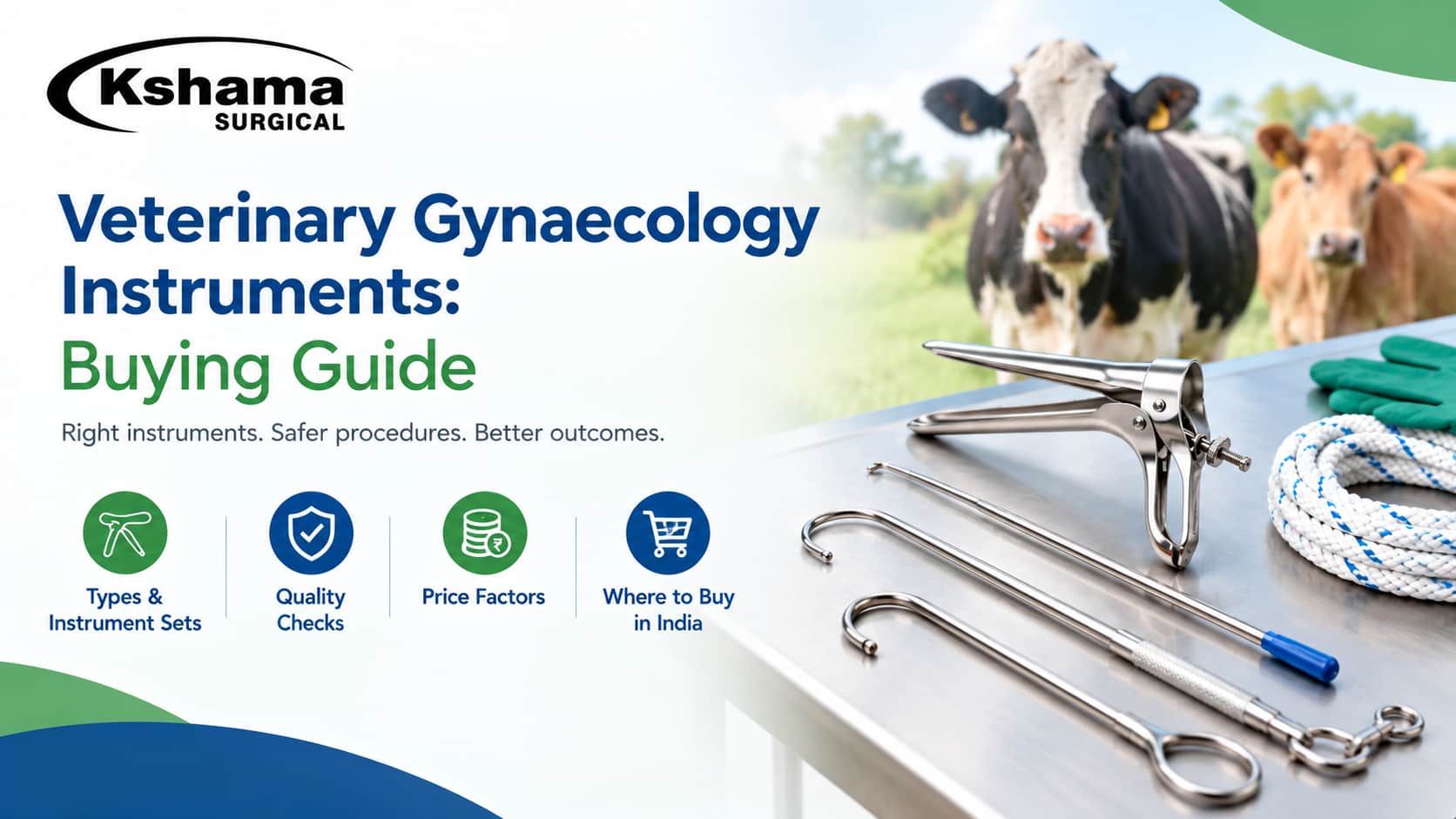
Veterinary gynaecology instruments are the speculums, catheters, hooks, ropes and obstetric tools used to examine, treat and assist animals during breeding, calving and reproductive procedures. Choosing veterinary gynaecology instruments well affects both animal welfare and the safety of the person using them, because a badly finished hook or an ill-fitting speculum can cause injury. This buying guide explains which instruments belong in a set, how simple and heavy dystocia sets differ, what to check on quality, how pricing works and where to buy, so a clinic, dairy farm or veterinary team can equip itself with confidence.
What Are Veterinary Gynaecology Instruments?
The term covers instruments made for reproductive and obstetric work in animals such as cattle, buffalo, goats, sheep and horses. Some are used for examination, others for treating uterine conditions, and a large group exists specifically to help during difficult births, known as dystocia. Because animals differ so much in size, veterinary gynaecology instruments are made in different lengths and strengths, and a tool suited to a goat will not necessarily serve a large buffalo.
These instruments are used by veterinarians and trained animal health workers. Obstetric procedures carry real risk for both animal and handler, so the right equipment supports, but never replaces, proper training and veterinary judgement.
Main Instrument Groups
Most sets are built from a handful of groups. Knowing what each group does helps you decide whether you need a full set or only a few items.
- Examination instruments: vaginal speculums in stainless steel, available in several sizes, allow visual examination of the vagina and cervix.
- Intrauterine instruments: catheters used to deliver fluids or medication into the uterus.
- Traction and repositioning tools: obstetric handles, chains, ropes and eye hooks that help apply controlled traction to a fetus.
- Fetal extraction tools: hooks, embryotomy wire with handle and introducers used in complicated deliveries.
- Tissue handling instruments: forceps such as Babcock and Allis, which are also used in gynaecological work on animals.
- Support items: brushes, soap, lubricant gel, heavy aprons and gloves that make the procedure cleaner and safer.
For a deeper look at one tissue-handling instrument, the Kshama Surgical article on Babcock forceps in gynaecology and veterinary procedures explains its design and typical uses.
Simple Sets vs Heavy Sets vs Single Items
Buyers usually choose between a compact set, a heavy set stored in a toolbox, or individual items. The table below describes the typical differences in qualitative terms.
| Factor | Simple Dystocia Set | Heavy Set With Toolbox | Individual Instruments |
| Best suited for | Occasional field use | Regular calving work, larger practices | Topping up or replacing worn items |
| Storage | Compact | Toolbox keeps contents together | Depends on your own case |
| Support items | Basic brush and soap holder | Often adds apron, soap, lubricant | Bought separately |
| Coverage of procedures | Core obstetric tasks | Broader range including embryotomy | Only what you choose |
| Main drawback | May lack speciality items | Higher outlay, more to maintain | Risk of buying mismatched pieces |
Check each listing carefully, because contents vary. The product pages for the simple and heavy sets on the Kshama Surgical site list every instrument by name, which makes it easy to see what you are getting.
Choosing by Species and Caseload
The right veterinary gynaecology instruments depend first on the animals you treat. A goat and sheep practice needs small speculums, shorter hooks and lighter handles, while a dairy unit working with cattle and buffalo needs longer, stronger tools that can bear traction. Buying a large-animal set for a small ruminant caseload wastes money and risks injury, because oversized instruments are harder to control in a confined space.
Next, consider how often the instruments are used. A veterinary team that attends calvings weekly will benefit from a heavy set kept ready in a toolbox, whereas a clinic that meets a difficult birth a few times a year may do better with a compact set and a reliable source for extra items. Veterinary gynaecology instruments should also be matched to who will handle them: a trained veterinarian can use the full range, while an animal health worker may be limited to examination and basic assistance tools under supervision.
Finally, plan for replacement. Ropes, wire and small consumables wear out faster than steel hooks and handles, so a supplier who lists them separately keeps a set usable for years. Choosing veterinary gynaecology instruments this way turns a one-off purchase into a maintained working kit.
What to Check Before Buying
Quality matters more in this category than in most, because obstetric work involves force and sometimes emergency conditions.
Buying Checklist
- Steel grade: stainless steel resists corrosion and suits repeated cleaning and disinfection.
- Finish: smooth, burr-free surfaces protect both animal tissue and the handler’s hands.
- Size range: confirm lengths suit the species you treat, from goats and sheep to cattle.
- Joints and handles: threaded connections and handles should tighten securely without wobble.
- Set contents: compare the named contents against your actual procedures.
- Storage: a toolbox or case keeps instruments organised and protected.
A frequent mistake with veterinary gynaecology instruments is buying the largest set available and never using half of it. Another is buying individual pieces from different sources and finding that threads or handles do not fit together. Matching a set to your species and caseload avoids both.
Price, Rates and Where to Buy
Price varies with instrument type, set size, steel grade and included accessories, so comparing like with like is essential. A veterinary gynaecology instruments price in India for a single speculum will not resemble the price of a full heavy set with toolbox, and a veterinary gynaecology instruments price in India that omits accessories can look cheaper than it really is. Reading a gynaecology instruments price list item by item shows what each component costs and where a set offers value.
When a listing shows a gynaecology instruments rate in India, check whether it covers a single piece, a set or a pack. Ask for the gynaecology instruments price per piece for consumables and small items so you can compare sellers fairly. A quoted gynaecology instruments rate in India is only useful when it names size and material, and the same logic applies to gynaecology instruments price per piece for accessories.
Sourcing is equally important. An established animal obstetric instruments supplier in India will state materials, keep spares available and answer compatibility questions. Buyers who want to buy gynaecology instruments online India can review full contents lists before ordering, while those searching for animal obstetric instruments online India will find size options listed on individual product pages. Anyone seeking animal obstetric instruments for sale in India in quantity should ask about batch consistency, and a supplier of animal obstetric instruments for sale in India should also be able to offer spare hooks, ropes and handles.
Advantages and Disadvantages of Owning Your Own Set
Advantages
Owning veterinary gynaecology instruments outright brings several benefits.
- Readiness: instruments are on hand during a calving emergency rather than being sourced at the last minute.
- Hygiene control: you decide how instruments are cleaned, stored and replaced.
- Familiarity: repeated use with the same tools builds confidence and technique.
- Cost over time: regular users often spend less than they would on repeated hire or borrowing.
Disadvantages
- Upfront cost: a full heavy set is a significant purchase for a small unit.
- Training need: owning obstetric tools does not create the skill to use them safely.
- Maintenance: stainless steel still needs careful cleaning and drying.
- Unused items: rarely used pieces may sit idle for months.
Care, Cleaning and Safe Use
Well-maintained veterinary gynaecology instruments last far longer. Clean instruments promptly after each use. Remove organic matter with a brush and clean water, then disinfect according to your veterinarian’s protocol, rinse, dry thoroughly and store in a dry case. Separate threaded parts so they dry fully, and check joints, hooks and wire introducers for damage before every procedure. Never use a bent or cracked tool, and always follow veterinary advice for the animal in front of you.
Common Mistakes to Avoid
- Storing instruments damp, which encourages corrosion at joints and threads.
- Using tools beyond their intended size, especially small speculums on large animals.
- Skipping inspection of hooks and handles before use.
- Working without training, which risks injury to the animal and the handler.
- Mixing worn and new pieces in a sterile set without checking condition.
Frequently Asked Questions
What are veterinary gynaecology instruments used for?
Veterinary gynaecology instruments are used to examine, treat and assist animals during reproductive and obstetric procedures. They include speculums, intrauterine catheters, obstetric hooks, ropes, handles and embryotomy tools, all used by trained personnel.
What is the veterinary gynaecology instruments price in India?
The price depends on instrument type, size, steel grade and whether accessories are included. A single speculum and a full heavy set differ greatly. Compare item-wise quotations and confirm exactly what each price covers.
Where can I buy gynaecology instruments online in India?
You can buy gynaecology instruments online India-wide from manufacturers and dealers that list contents, sizes and materials, and a search for animal obstetric instruments online India shows size options per item. Choose a seller who provides written specifications, clear return terms and bulk support for regular orders.
How do I find an animal obstetric instruments supplier in India?
Look for suppliers that publish product contents, steel grade and certifications, and that can supply spares later. A reliable animal obstetric instruments supplier in India will answer compatibility and sizing questions in writing.
How should I compare gynaecology instruments price per piece?
Divide the pack or set price by the number of pieces and compare only items of the same size and steel grade. Gynaecology instruments price per piece is meaningful only when the specification matches.
Is a gynaecology instruments price list available before ordering?
Yes. Suppliers commonly publish a gynaecology instruments price list or send quotations on request. Use it to compare item-wise costs, confirm what is included and request updated rates before placing an order, since these depend on size and volume.
Can beginners use veterinary gynaecology instruments?
No, not without training. Obstetric instruments carry real risk for animal and handler. Beginners should learn under an experienced veterinarian or animal health worker and call a veterinarian for difficult or unclear cases.
Conclusion
Choosing veterinary gynaecology instruments comes down to matching the set to your species, caseload and skill level, checking steel grade and finish, reading prices item by item and buying from a supplier who publishes contents and keeps spares. A simple set covers occasional work, a heavy set with a toolbox suits regular calving support, and individual pieces top up an existing kit. Whatever you choose, safe use depends on training, hygiene and proper maintenance.
Before buying veterinary gynaecology instruments, list the species you treat, the procedures you perform and how often you need the set. Explore the Kshama Surgical gynaecology instruments range or contact the team for guidance on the right set for your practice.
