
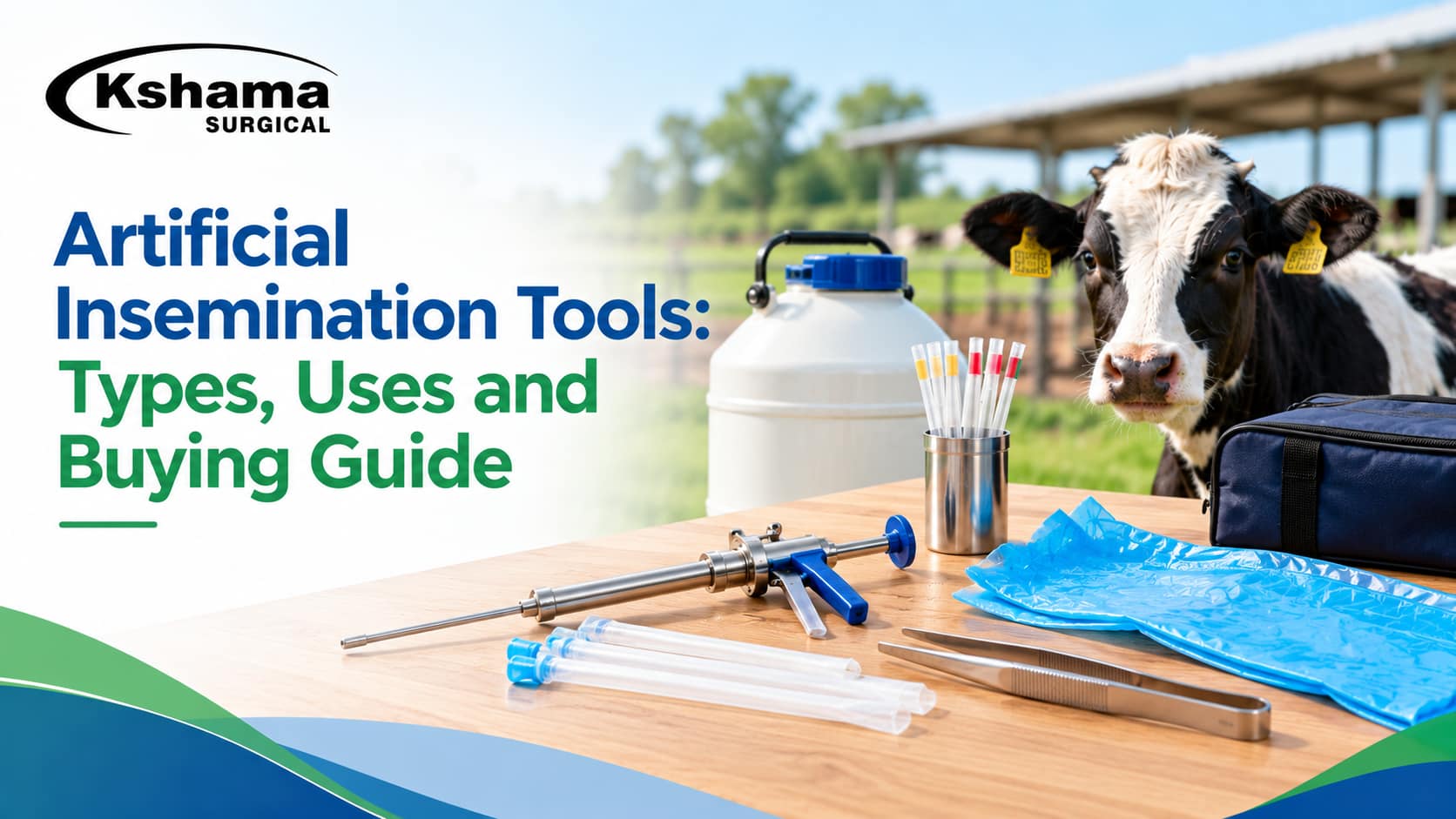
Artificial insemination tools are the instruments that carry semen safely from storage to the animal. This guide explains each type, its use and how to buy well.
Good breeding results depend on both timing and equipment, and a weak link in either can waste valuable semen. A reliable set of artificial insemination tools covers storage, thawing, loading, delivery and hygiene, and the sections below explain how each part fits together.
Types of Artificial Insemination Tools
Artificial insemination, often shortened to AI, replaces natural mating with a controlled procedure in which stored semen is placed in the cow or buffalo by a trained person. Artificial insemination is widely used in cattle breeding because it allows farmers to use semen from selected bulls without keeping them on the farm. The equipment can be grouped by the job it does.
Insemination Guns
The AI gun is a slim stainless steel or brass instrument with a plunger, designed to hold a semen straw and deliver it through the cervix. Designs differ in the way the sheath is secured, such as auto lock, O-ring and French lock patterns. Choose a pattern that matches the straw size you use, because mini and standard straws need different guns.
Sheaths
A disposable sheath fits over the gun and protects the straw from contamination as it passes through the reproductive tract. Sheaths are single use, so they are bought in larger quantities. A split or poorly moulded sheath can undo the careful handling that came before it.
Gloves
Long-arm gloves, often sold in lengths of around 34 to 36 inches, protect the technician and keep the procedure hygienic during rectal palpation. Among all artificial insemination tools, they are the cheapest item in the kit and the one used most often, so a tough, well-fitting glove saves time and trouble.
Semen Storage and Handling
Frozen semen is kept in a liquid nitrogen container until it is needed. Related accessories include straw forceps, a thaw flask or water bath, a funnel for liquid nitrogen transfer and goblets or visotubes for storing straws. Each protects the semen from temperature shock, which is the main way viability is lost. For this reason, storage items are the artificial insemination tools that deserve the closest attention, because a gun and sheath cannot rescue semen that has already warmed in transit or been handled roughly.
Semen Collection Tools
AI centres use an artificial vagina to collect semen from a bull. This is specialised work, so most farms buy straws rather than collect semen themselves, but breeding stations and larger units rely on these tools.
Kit Bags and Holders
Bags, holders and containers for guns and sheaths keep the instruments clean and organised during field visits. They are simple items, yet they reduce the chance of contamination between farms, and a technician who carries artificial insemination tools from one farm to the next benefits from a kit that is easy to wipe down and keep sealed.
AI Instruments List by Task
A complete AI instruments list helps you check that nothing is missing before a breeding visit. For a broader view of what to stock, the Kshama Surgical guide to an AI instruments list for cattle goes into more detail. The table below summarises the common artificial insemination tools by task.
| Task | Tool | Purpose |
| Storage | Liquid nitrogen container | Keeps frozen semen at very low temperature |
| Handling | Straw forceps and thaw flask | Moves and thaws straws safely |
| Delivery | AI gun | Holds the straw and places semen |
| Protection | Disposable sheath | Prevents contamination during passage |
| Hygiene | Long-arm gloves | Protects operator and animal |
| Transfer | Funnel and goblets | Supports nitrogen refilling and straw storage |
| Collection | Artificial vagina | Collects semen from bulls at AI centres |
| Carrying | Kit bag and holders | Keeps instruments clean in the field |
How the Instruments Work Together
Artificial insemination tools work as a system, not as separate purchases. A breeding visit follows a logical order. The technician prepares the gun and thaws the straw according to the semen supplier’s instructions, loads it and fits a sheath. The gloved hand guides the gun through the cervix, and the semen is deposited at the correct site before the gun is withdrawn. Every step depends on the tool before it, which is why a good set is matched rather than assembled at random.
Timing matters as much as equipment. The procedure is most effective when it is carried out at the right stage of the animal’s cycle, and a trained technician or veterinarian is best placed to judge that. Even excellent insemination tools cannot make up for poor heat detection or rough handling.
Choosing Cattle Breeding Instruments
Farms and clinics often ask which artificial insemination tools to buy first. When assembling cattle breeding instruments, begin with the items that cannot be improvised and add accessories as the workload grows. A ready-made AI kit is one option, and many technicians also buy the individual pieces they need. The same insemination tools may suit several farms, but the volume of work and the straw type should guide the choice.
Points to check before buying:
- Straw compatibility: confirm that the gun fits the straw size you use.
- Material: stainless steel and brass are common, and the finish should be smooth with no rough edges.
- Lock pattern: pick the sheath lock that your technicians know and trust.
- Quantity of consumables: order sheaths and gloves in bulk, since they are used every visit.
- Supplier support: choose a source that can supply spares and replacements consistently.
What to Weigh Before You Invest in AI Equipment
Anyone who has run a breeding programme will tell you the equipment is the easy part. The harder question is whether your farm can support the routine that artificial insemination tools depend on.
The case for AI is strong. It opens up semen from proven bulls without the expense and danger of keeping one on the farm, it makes breeding records far easier to maintain, and with good hygiene it can reduce the spread of some infections that natural mating carries.
The commitments are just as real. Frozen semen is only as good as the nitrogen keeping it cold, so someone must own the job of checking levels and arranging refills; a container left to run low can ruin a season’s straws before anyone notices. Heat detection and timing rest with people rather than tools, which means budgeting for a trained technician or a dependable local service instead of hoping to learn by trial and error. Thawing is unforgiving too, since a straw handled carelessly in the first minute cannot be recovered.
Recurring costs deserve a line in the plan. Sheaths and gloves are used at every visit, so a farm that breeds often spends steadily on them, and it is worth pricing a year of consumables before comparing kit prices. For most farms the sensible start is a modest, well-chosen set, a reliable storage arrangement and one named person responsible for both. Extras can follow once the routine is working.
What Affects the Cost of AI Equipment
The price of artificial insemination tools varies widely depending on the piece. At the time of writing, the Kshama Surgical listings include AI guns starting from a few hundred rupees depending on the pattern, disposable sheaths sold in packs and a full AI kit listed at ₹15,000 after a reduction from ₹25,000. These figures can change, so check the product pages before ordering.
The main drivers of price are:
- Material and finish: better stainless steel and smoother machining cost more.
- Pattern and features: specialised guns, such as camera-equipped models, are priced above basic ones.
- Quantity: consumables are cheaper per unit in larger packs.
- Kit or individual items: a kit offers convenience, while buying separately gives more control.
Care, Cleaning and Storage
Artificial insemination tools last longer, and protect the semen better, when they are cared for properly. These are the mistakes that appear most often:
- Reusing a sheath instead of fitting a fresh one for each animal.
- Leaving the gun dirty, which allows residue to build up in the barrel.
- Thawing straws incorrectly or exposing them to temperature swings.
- Letting the liquid nitrogen level drop without checking it.
- Storing gloves in direct sunlight or heat, which weakens the material.
Clean reusable parts after each visit, dry them fully and keep them in a clean holder. Check the liquid nitrogen level on a schedule and keep a simple record of refills. A short written checklist for the technician, covering gun, sheaths, gloves, straws and container, takes seconds to follow and prevents the small oversights that cost the most. Replace worn parts promptly instead of waiting for a failure in the middle of a breeding season.
Frequently Asked Questions
What are artificial insemination tools?
Artificial insemination tools are the instruments used to store, thaw, load and deliver semen during AI. The main items are the AI gun, sheaths, long-arm gloves, a liquid nitrogen container and handling accessories such as forceps, a thaw flask and a funnel.
What is included in an AI instruments list for cattle?
A typical kit includes an AI gun, disposable sheaths, long-arm gloves, a liquid nitrogen container, straw forceps, a thaw flask, a funnel and a carrying bag. Breeding stations may also use an artificial vagina for semen collection.
Which insemination tools are essential for a small farm?
Among the artificial insemination tools on the market, most small farms need a gun that fits their straw size, a supply of sheaths and gloves, and access to properly stored semen. Many farms depend on a visiting technician who brings and maintains these items, so check who is responsible before buying.
How do I choose an AI gun?
Match the gun to your straw size and sheath lock pattern, such as auto lock, O-ring or French lock. Check that the plunger moves smoothly, the finish is clean and the metal is suitable for repeated cleaning. Ask your technician which pattern they prefer.
Are cattle breeding instruments reusable?
Some are. AI guns, forceps and containers are reusable after proper cleaning, while sheaths and gloves are single use. Reusing a sheath risks contamination, so fit a new one for every animal and clean the gun after each visit.
How should liquid nitrogen containers be handled?
Keep the container upright, in a ventilated place, and check the nitrogen level on a regular schedule. Use a funnel for refilling, wear protective equipment and never seal the container tightly. Follow your supplier’s safety instructions for handling and transport.
Can a farmer perform artificial insemination without training?
It is not advisable. The procedure requires knowledge of anatomy, heat detection and hygiene, and local rules may require qualified personnel. Even the best artificial insemination tools do not replace training, and a recognised veterinary or dairy programme improves conception results and protects animal welfare.
Conclusion
A reliable set of artificial insemination tools is built around a few dependable items: an AI gun that fits your straws, fresh sheaths, tough long-arm gloves and safe semen storage. Choosing well means matching tools to your breeding routine, buying consumables in sensible quantities and caring for reusable items after every visit. Good equipment supports good technique but does not replace it.
Before you order, list the number of animals you breed, the straw type you use and who performs the procedure. Then explore the Kshama Surgical range of artificial insemination tools or contact the team for help choosing instruments that suit your farm or clinic.
