
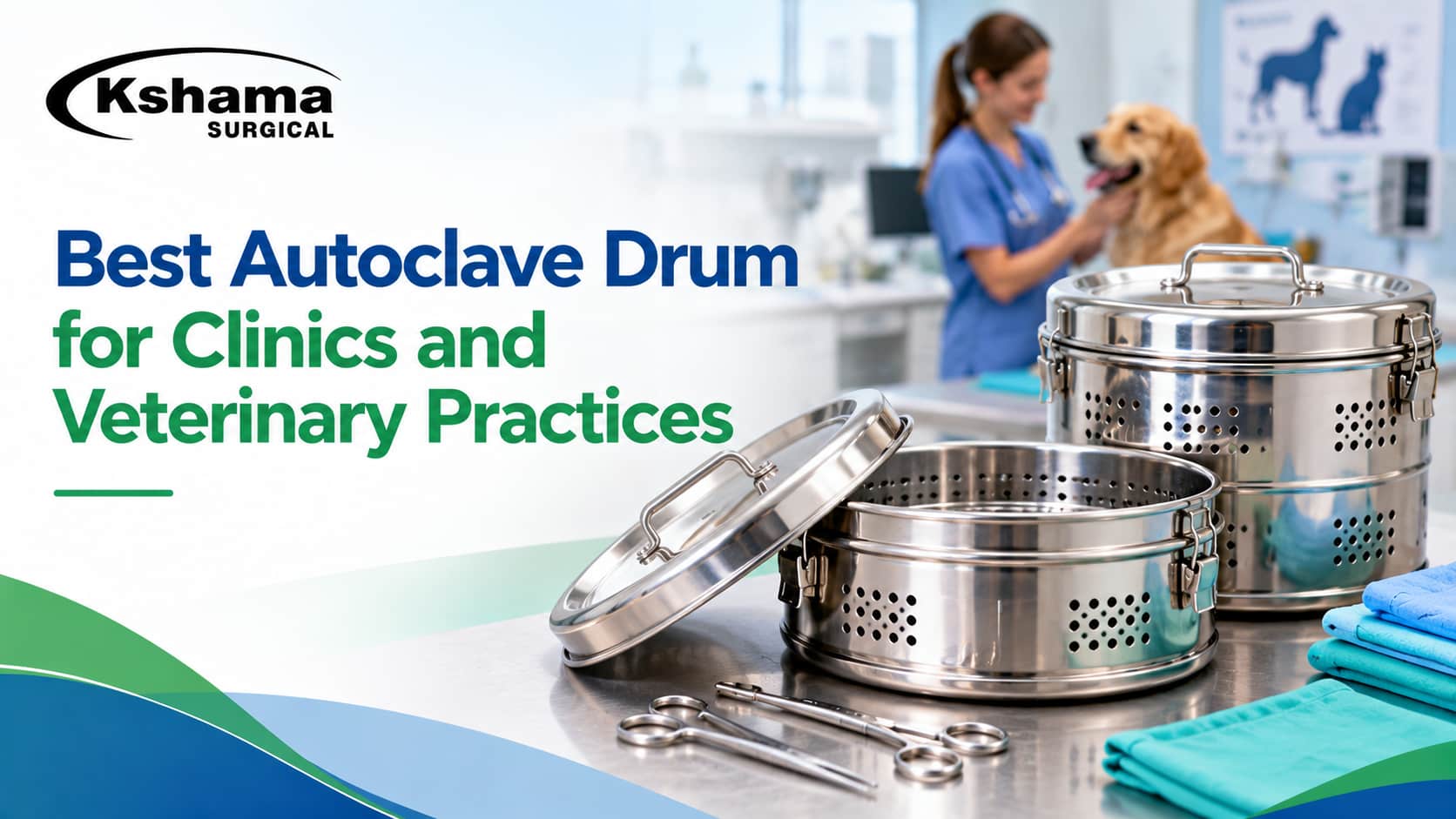
The best autoclave drum is the one that lets steam in during the cycle and keeps instruments sterile afterwards. This guide shows what to check before buying.
Most clinics buy a drum once and expect it to last for years, so the decision deserves care. An autoclave drum is a perforated stainless steel container used to hold instruments, dressings and linen during steam sterilisation, and the sections below explain how to judge one.
What an Autoclave Drum Does
An autoclave drum is a cylindrical container with a lid and a sliding band of side vents. During sterilisation the vents are opened so steam can pass through the load. When the cycle ends, the vents are closed so the contents stay protected until they are needed. The drum does not sterilise anything by itself, because it has no heat source. It is a carrier and a storage vessel that works inside an autoclave.
That separation of roles explains why drums remain popular in hospitals, small animal clinics and large animal practices. One container can hold a complete surgical pack, such as drapes, swabs and instruments, and the whole pack is sterilised, stored and carried to the theatre together. Staff open it only when the procedure begins.
In many places the same container is also called a dressing drum, because it was traditionally used for gauze, cotton and surgical dressings. The names are largely interchangeable, and a dressing drum of good quality serves instruments and linen equally well.
Sterilisation Drum Features That Matter
A sterilisation drum looks simple, yet small differences in build decide whether it stays reliable, and the drum is only as dependable as the autoclave it is paired with. Check these points before ordering:
- Material: stainless steel resists rust, steam and repeated cleaning. Ask the supplier to name the grade rather than relying on a general description.
- Vent mechanism: the sliding band should move easily with one hand and stop firmly at each end. A stiff or loose band is a sign of poor finishing.
- Lid and rim: the lid must sit flat and close fully. A warped rim lets air and moisture enter after the cycle.
- Handles: sturdy handles allow safe lifting of a hot drum with protective gloves.
- Seams and welds: smooth, continuous joins are easier to clean and less likely to trap residue.
Why Vent Design Deserves Attention
Steam must reach every item in the load, and the vents are its only way in. If the band does not open fully, air stays trapped and cold spots can form. If it does not close fully after the cycle, the load can be contaminated as it cools and draws in room air. Test the band several times when the drum arrives and again at regular intervals.
Material and Finish
Smooth surfaces resist residue and are easier to inspect. Dents are more than cosmetic, because a bent rim or lid can affect the seal. Handle drums carefully, avoid stacking heavy items on them and retire any that no longer close properly.
Choosing the Right Size and Capacity
Size is a practical decision rather than a technical one. A drum that is too small forces staff to split a pack across several containers, and one that is too large invites overfilling or wasted space. Match the drum to your most common pack and to the chamber of your autoclave.
Kshama Surgical lists its heavy-duty stainless steel autoclave drum in several sizes at the time of writing, so measure your chamber and your usual pack before choosing. Ask what your typical surgical pack contains and how bulky it is, how many drums fit inside the chamber at once, and whether you prepare one large pack or several smaller ones each day.
Many clinics keep two or three sizes, using small drums for suture and dressing packs and larger ones for full surgical sets. Pack loosely so steam can circulate, and never press items down to fit a lid.
Matching an Autoclave Drum to Your Autoclave
Clearance matters more than people expect. A drum that touches the chamber wall or sits tightly against its neighbour leaves little room for steam to move, and the vents may not open fully. Leave a gap around each drum, place it upright as the manufacturer advises, and confirm that the sliding band can travel its whole length once the drum is loaded. If you plan to buy several drums at once, test one in your autoclave first and then order the rest in the same pattern, so every container behaves the same way and staff learn a single routine.
Comparison: Drums, Wrapped Packs and Pouches
A drum is one of several ways to package items for sterilisation. The table compares the main options qualitatively.
| Factor | Autoclave drum | Wrapped pack | Sterilisation pouch |
| Reusability | Reusable for years | Wrap is usually single-use | Single-use |
| Best suited for | Large or repeated packs | Medium trays and sets | Individual small items |
| Running cost | Low after purchase | Ongoing cost of wraps | Ongoing cost of pouches |
| Handling | Rigid and protective | Flexible, can tear | Light, easy to store |
| Upkeep | Needs vent and rim checks | Needs careful folding | Needs a correct seal |
| Typical setting | Hospitals and busy clinics | General practice | Dental and minor procedures |
Key Factors to Consider Before Choosing How You Pack Instruments
Packaging decisions get made quickly and regretted slowly. The table turns the choice into purchasing terms.
| Factor | What to weigh |
| Cost | Higher outlay for a drum, repeat spend on wraps and pouches |
| Turnaround | A drum is repacked once cooled and checked; wraps need folding and taping |
| Quality control | Rim, lid and vent band need inspection; wraps and pouches are judged by seals and tears |
| Customisation | Drums come in several sizes; pouches suit single items |
| Quantity | Large sets and linen suit a drum; small loose items do not |
| Delivery and storage | Drums need careful packing to avoid dents; consumables take shelf space |
| Scalability | Add drums in one pattern; consumables scale with caseload |
| Long-term value | Years of service if inspected, little if the seal is neglected |
Cost is the factor most people look at first and the one most often misread. A drum looks expensive beside a box of pouches, yet the pouches are a recurring bill, so for a clinic that sterilises daily the comparison favours the drum over time. For a clinic that sterilises rarely, the arithmetic is closer.
Quality control deserves more attention than price. A dent in the rim or a vent band that no longer closes fully will not show from outside, and the pack can be contaminated as it cools. Build the check into the routine: run the band through its full travel, confirm the lid seats evenly and retire any autoclave drum that no longer seals.
Size and weight shape the daily experience. Drums are heavier and bulkier than the alternatives, which is no trouble on a dedicated trolley and a nuisance in a cramped preparation room. Anything that cannot tolerate steam, such as plastic parts and delicate probes, needs a different method altogether.
Understanding Price and Value
Buyers often compare the autoclave drum price across suppliers expecting one number, but the range depends on size and construction. At the time of writing, the Kshama Surgical heavy-duty drum is listed from ₹1,200 to ₹3,000 depending on the variant. For current figures, see the autoclave drum price listings on the website, because prices change.
When comparing offers, look past the lowest figure. The factors below shape real value:
- Thickness and build quality: sturdier metal resists dents that spoil the seal.
- Vent and lid fit: a well-made band and rim last longer and seal better.
- Finish: smooth surfaces clean more easily.
- Supplier support: the ability to reorder the same pattern matters when you need several drums.
A drum that costs slightly more but stays sealed for years is generally better value than a cheaper one that must be replaced early.
How to Use a Drum Correctly
Even the best drum fails when it is misused, and the same handful of errors cause most failures. The common mistakes are listed below.
- Loading it with the vents closed, which blocks steam from the load.
- Overfilling it so that steam cannot circulate.
- Leaving the vents open after the cycle, which allows contamination.
- Packing wet or dirty instruments, which undermines sterilisation.
- Skipping chemical indicators, so no one can confirm the cycle worked.
Indicators deserve special mention. A chemical indicator strip placed inside the pack shows that steam reached the centre of the load, while a strip on the outside only proves the drum went through the cycle. Many facilities add periodic biological indicators as well. Treat these checks as part of owning an autoclave drum rather than an optional extra, because the drum itself cannot tell you whether a cycle succeeded.
A reliable routine is straightforward. Clean and dry the instruments, pack loosely, open the vents, sterilise at your validated settings, close the vents when the drum comes out, label it with the date and store it in a clean, dry place. Follow your facility’s own policy on storage time and reprocessing, because it depends on conditions and local rules.
Frequently Asked Questions
What is an autoclave drum used for?
An autoclave drum holds instruments, dressings and linen during steam sterilisation and keeps them protected afterwards. Steam enters through opened side vents, and the vents are closed when the cycle ends so the contents remain sterile until the pack is opened.
Is a sterilisation drum the same as a dressing drum?
Usually, yes. Both names describe a perforated stainless steel container used in steam sterilisation. The older term is linked to gauze and dressings, while the newer one describes the function more generally. Many suppliers use the two names for the same product.
What affects the autoclave drum price?
The autoclave drum price depends mainly on size, thickness of the steel, quality of the vent band and rim, and finish. Larger and sturdier drums cost more. Compare the specification as well as the number, since a poor seal wastes the savings.
Can an autoclave drum sterilise instruments by itself?
No. A drum has no heat source and only holds the load. Sterilisation happens in the autoclave, where steam at a validated temperature and pressure reaches the contents through the vents. The drum then keeps them protected after the cycle.
How do I choose the right drum size?
Match the drum to your usual surgical pack and your autoclave chamber. Choose a size that lets you pack loosely so steam can circulate. Many clinics keep a small and a large drum, so suture packs and full surgical sets each have a suitable container.
How long does a sterilised drum stay sterile?
It depends on the drum, storage conditions and your facility’s policy. A sealed drum kept clean and dry stays protected for longer than one that is handled often. Set a reprocessing interval in your protocol and apply it consistently.
How should I care for an autoclave drum?
Wash and dry it after each use, check the rim and vent band for dents and test the band’s movement. Store it clean and dry. A dressing drum with a damaged seal should be repaired or replaced before further use.
Conclusion
The best autoclave drum is made of good stainless steel, has a smooth vent band, a flat rim and a lid that closes fully, and suits the packs your clinic prepares. It matters as a storage vessel as much as a carrier, because it keeps instruments sterile between the autoclave and the operating table. Match the size to your chamber, inspect the seal often and run indicators in every load.
Before you buy, list your usual packs, the number of drums your autoclave can hold and how many you need in rotation. Then explore the Kshama Surgical range of drums and sterilisation equipment, or contact the team for help choosing sizes that fit your practice.
